Lee J. Cobb Quotes
The HUAC did a deal with me. I was pretty much worn down. I had no money. I couldn't borrow.
Navasky, Victor S. Naming Names. Viking Press, 1980, p. 274.

The Red Scare had affected much of the country. The House Un-American Activities Committee had frightened much of the country claiming that the Communists had infiltrated the government. But when facts and proof were demanded, all they came up with some workers in the Hollywood film industry who had gone to communist meetings and some who had joined the party before the War when The Great Depression was still plaguing the country. The Hollywood and TV executives caved in to the political demagogues and fired and blacklisted not only the communists but those who refused to testify. The actors and musicians could not work for several years until the country came to its senses, but the screenwriters wrote under false names. At least one Academy award was won that way.

Seeger had been a member of the Communist Party and had left it in 1950. See {635866}. He was later called before the House UnAmerican Activities Committee and asked to reveal the names of others who had been members. In those days of the red scare and McCarthyism, most people asked to name names and not wanting to do so “took the 5th Amendment” and could not be legally forced to reveal the names. Seeger as a matter of principle refused to plead the 5th Amendment because he was not afraid of incriminating himself and had done nothing criminal anyway. So he, a war veteran of WWII, instead refused to answer citing his First Amendment right of freedom of association. There was no legal precedent for this, and he was indicted and convicted for Contempt of Congress. However, his conviction was overturned as unconstitutional by the U. S. Federal Appeals court. Seeger had prevailed legally. But in retaliation Seeger was blacklisted and none of the radio of TV networks or Hollywood Studios would allow him (and other blacklisted artists) to appear. See {642545} Today most Americans view what McCarthy, The Congressional Committee, the networks, and Hollywood studios had done as contemptible.

Bhutto, after Pakistan’s defeat by India, initiated a massive nuclear bomb development program which was contrary to the Nuclear Non-Proliferation policy of the United States. Bhutto went ahead anyway and soon Pakistan had a nuclear capability, much to the distress of the other nuclear powers in the world.

Referring to Chilean dictator Augusto Pinochet:


Nixon staff assistant Chuck Coulson used a variant of this quotation. See {628753}.


Angered by the kidnapping and imprisonment of Americans and tired of paying tribute to the Barbary pirates, Jefferson sent John Paul Jones to Algiers to “negotiate” a deal.


Explaining apartheid to the European Press.


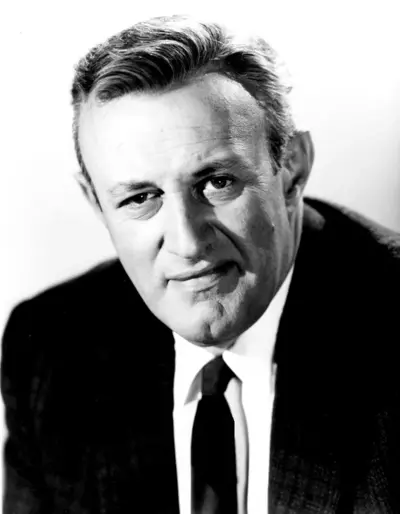
Lee J. Cobb was an American actor. He played the role of Willy Loman in the original Broadway production of Arthur Miller's 1949 play Death of a Salesman under the direction of Elia Kazan. He also performed in On the Waterfront (1954), 12 Angry Men (1957), and The Exorcist (1973). On television, Cobb starred in the first four seasons of the Western series The Virginian. He often played arrogant, intimidating and abrasive characters, but he also acted as respectable figures such as judges. He was twice nominated for the Academy Award for Best Supporting Actor, for The Brothers Karamazov (1958) and On the Waterfront (1954).
