Rick Renzi Quotes
The home ownership process for Native Americans has been hobbled by bureaucratic delays and regulations.
United States, Congress, House. Representative Rick Renzi speaking on the Native American Housing Enhancement Act of 2005. Congressional Record, 109th Cong., 1st sess., 6 Apr. 2005. Government Printing Office, 2005.


While Jefferson was clear on this point, there were other forces and points of view that did not recognize Indian rights and were prepared to use force to obtain Indian lands. These, together with some Indians who made bad and sometimes corrupt bargains and treaties ceding land, produced the loss of most of the Indian land in America.
The central Indian policy problem for Jefferson’s Administration was the fact that most Indians hunted for subsistence and the amount of land needed to support a hunting society was per capita much greater than an agricultural and especially an industrial one. Jefferson had no personal animosity against the Indians as many in his day did. But he perceived the need to obtain Indian lands for white agricultural use.


The treaty was signed by a number of people including the Navajo leaders but Sherman or his staff drafted most of it. Sherman also had the title then of Indian Peace Commissioner. This clause, together with Article V, {617991} guaranteed the territorial integrity to into the 21st century. The super majority requirement was key, preventing what happened to many other Indian land holdings which were sold off by individuals or so called chief’s who were not really representing the majority of the tribe.

Jackson refused to obey this decision, He was the only American President who disobeyed a Supreme Court Decision. In doing this, he killed tens of thousands of Indians, allowed the Southern Whites to steal most of the Cherokee land. His Indian Removal, contrary to this Supreme Court decision, was the worst case of ethnic cleansing in the history of the United States.

The whites had constantly encroached on the Cherokee land which was too large for any reasonable patrolling by the Indians themselves. The Federal government persuaded the Cherokee to sign a treaty by which the Indians would give up their title to the larger part of their land. The most important quid pro quo was that the Federal Government would protect the remainder of the Cherokee land from incursion by whites or even other Indians. However, whites who coveted the land started to encroach and build farms and ranches. The Federal government was reluctant to use American soldiers against American citizens and was looking for a way out. However, the Cherokee chiefs were reminding them of their obligation. The state governments were less concerned about Federal treaties, and Georgia passed a law that said that all the Cherokee land must be governed by State Law contrary to the Treaty which gave the Cherokee total sovereignty. But the Feds were not anxious to have a showdown with the states on this issue. Whites, with the connivance of the state governments and the support of some Federal Officials offered to amend the treaty with the Cherokee. The whites would pay the Indians fair market value for their land in the East. The Federal Government would provide equal amount of land in the Indian Territory of Oklahoma, then a territory. The Feds would assist with the relocation and provide troops to protect the Cherokee from thieves and raiders—whites and Indians, and would guarantee that the Cherokee would be completely sovereign in the new land. The chief’s did not want to renegotiate the old treaty—they just wanted it enforced. The Supreme Court ruled in their favor, but President Jackson, ignored the ruling and forced the Cherokee onto the Trail of Tears for Oklahoma and the whites took over the valuable Cherokee land.


The meeting included several Indians, President Grant, and the Secretary of the Interior and the Director of the Bureau of Indian Affairs. The Indians had been offered $25,000 and land in the Oklahoma Indian Territory in exchange for moving from their traditional lands.

There was then legislation proposed to to nullify a number of Indian treaties. Indians themselves were divided as to the desirability. Mrs. Roosevelt favored negotiations and discussions with each tribe separately regarding their treaties as opposed to the proposed legislation which treated the tribes monolithically when indeed they were 500 separate tribes with different cultures, needs and desires.

The Bushmen are of the indigenous people of Botswana who have only had extended contact with the larger world recently.

Wayne played so many parts depicting whites in the process of expanding Westward that many people saw him as an expert on the history of the Westward Expansion. He did not comment on the whites who then kept huge ranches “selfishly” for themselves or those who selfishly would not share the mineral rich land that they had taken with anyone including the original Indian owners. So in this view, the Indians should have not been capitalists but they should have been socialists and shared their resources.


Most of her modern admirers tend to repress this quotation which is very embarrassing for most modern conservatives. However, there is a minority of thinkers who maintain that land, unused, is open to anyone who will make use of it to improve civilization. Many conservationists, in contrast, extol unused land for preservation.

This is an important quotations for two reasons. First, one of the white Europan myths in the colonial era was that the Native America had not concept of land ownership and title. This quotation clearly refutes that/ Second, this shows that some Europeans coming to the new world opposed the view that the white Christians and a moral right to the Native American “heathen” land. A few like Williams did not.

The early Zionists had an understanding of how they were then perceived by the Arabs who had been living in land that was to become Israel. Like most other parts of the world, the land of Israel has been conquered and reconquered over the years. The area had been a Jewish kingdom in the immediate centuries before the birth of Christ. They had conquered it from the tribes that had conquered it from the Egyptians who had also conquered it. Then the Romans conquered. After that there were Muslims, Christians, the Ottoman Empire, the British and finally Israel was formed. Throughout this entire history, both Arabs and Jews had lived on the land along with and under the authority of whoever was the latest conqueror. In the hundreds of years before the establishment of the state of Israel, the Arabs had been in the majority. The 20th century saw a large influx of Jews who immigrated, purchased land and settled. There had been low level conflict as the Arabs became concerned that with the immigration
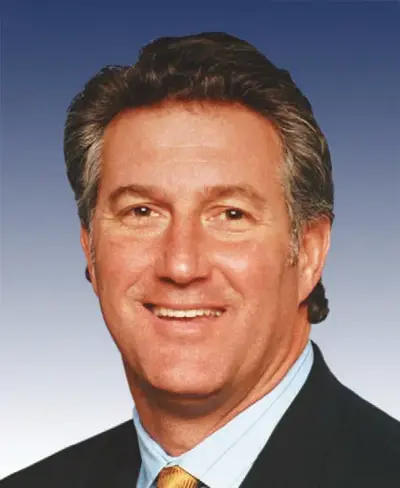
Richard George Renzi is a former American politician who was a Republican member of the United States House of Representatives representing Arizona's 1st congressional district from 2003 until in 2009. In 2013, he was convicted on federal criminal charges against him for his involvement in a land-swap deal.
