Benazir Bhutto Quotes
The Holy Book calls upon Muslims to resist tyranny. Dictatorships in Pakistan, however long, have, therefore, always collapsed in the face of this spirit.
Bhutto, Benazir. Daughter of Destiny: An Autobiography. Simon & Schuster, 1989.


This is a very important quotation as it shows the logic of many Islamic terrorists. To them Jihad is not terror regardless of what means are used. If the cause is just, like driving unbelievers from what they call Islamic land, then the violence is Jihad and is not only moral but is obligatory for a good Muslim. However if the cause is not moral—like invading someone else’s land, then the same actions are terrorism. The rest of the world defines terrorism by the means of the struggle—not the righteousness of the cause. Suicide Bombing which kills civilians shopping or at a wedding reception is terrorism whether the political or other end is good or bad. At the same time, members of the Muslim brotherhood often when they are speaking to Westerners or the media say that they are opposed to terrorism. The terrorism they are opposed to does not include to them does not include the terrorism of 9-11, the kidnapping and beheading of journalists, or bombing innocent civilians. That is why they can fund and support Hamas—the Palestinian component of the Muslim Brotherhood and still say they oppose terrorism. The occupation is the major offence they must rectify. The reality is that every group of people currently in the Middle East, is descended from peoples who occupied land by conquest and then were conquered by others. In Christ’s time, for example, Jerusalem and the area population was virtually all Jewish but the Romans had conquered and controlled the land. Some of the Jews became Christians, and they both shared the land because Christians then considered themselves to be a sect of Judaism. Then there were many conquests and re-conquests. The city has changed hands by force 44 different times. The Israelis were the last to capture it, The Jewish people were also amongst the earlier conquests, and the Palestinians argue that they inhabited the land even before Islam. Compared to Jerusalem, the problem of who has the right to the old Cherokee land in Georgia today is simple.


What is particularly interesting about this passage is that a Middle Eastern contemporary historian and commentator compared circumstances to political events with the Umayyads and the Abbisids to those in Persia and Rome. Chosroes (Khosrow) was a Persian King who had his brothers murdered, and Caesar was viewed as a tyrant. Even then, the history of politics, in one country influenced events and attitudes in others,

He was in many ways centuries ahead of his time with constructive ideas for any people and age. However, this was one of the exceptions. Unfortunately it became the norm for most Islamic countries even to modern times. Essentially, a bad ruler in this Islamic doctrine can be removed only if he does not follow Islam. For just being unjust or incompetent, revolution is not allowed and prayer is the only recourse. That is one of the major reasons that there have been so few Arab uprisings and revolutions although there have been many assassinations for alleged religious apostasy or insufficiency.


This quotation brought Mises much criticism at the time and has destroyed his moral credibility for the rest of his career. Like many others who supported the wealthy ruling classes, he expressed admiration for Fascism. Worse he claimed that Nazi German and Italian Fascism saved Europe when subsequent events proved that they destroyed Europe along with 30-40 million people killed. However, unlike most of the right wing Fascist enthusiasts of the day, he did—in the last sentence of this quotation which is often omitted by critical quoters—observe that Fascism success would not be permanent or long lived. His lack of moral condemnation of Fascism and Fascists however was clear. Some of his apologists and decuples observe that his philosophy tended to avoid all kinds of moral judgments pro and con about almost everything. It was this lack of a moral / ethical framework that most of his critics point to as a great failing of his. Also, many argue that this is another example of Mises tendency to exaggerate. Mises also took great criticism on what he claimed were “best intentions”; this included virulent racial and religious discrimination, militarism, aggression and expansionism, persecution of the handicapped. Ironically much later, Mises admitted that all of the Nazi evil was clear before it was implemented, {632449}. Some scholars think that Mises who was almost amoral outside the context of economics, began to develop a moral awareness in the reality of the Nazi charnel that much of Europe had become. One problem is that a person like Mises loses much credibility because of his lack of moral sensibilities and moral perception of a way of life and then exaggerates so many of his examples. However, many of his ideas and insights are very important in man’s quest of an economic system that produces substantial increases in standard of living and development and at the same time assure a modicum of subsistence and dignity and a fair opportunity to achieve much more. Mises’s ideas should not be ignored because of the failings of Mises the man.

Graham was a very strong advocate for democracies. However, many politicians advocated staying out of that struggle. They pointed out that Graham was very inconsistent. He opposed the U. S. taking sides in most of the other struggles between democracies and dictatorships such as in Saudi Arabia, Arab Emirates, Kuwait and the dictatorships of Azerbaijan, Zimbabwe, and Burma among others. Graham was a strong anti-Russian and supported countries who were against Russia or with whom Russia was at odds.


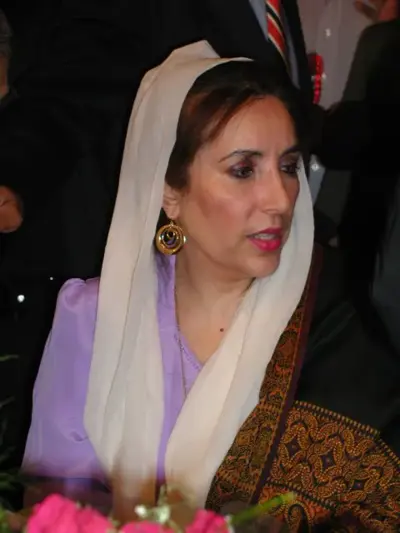
Benazir Bhutto was a Pakistani politician who served as Prime Minister of Pakistan from 1988 to 1990 and again from 1993 to 1996. She was the first woman to head a democratic government in a Muslim majority country. Ideologically a liberal and a secularist, she chaired or co-chaired the Pakistan Peoples Party (PPP) from the early 1980s until her assassination in 2007.
