Francis Parkman Quotes
The growth of New England was a result of the aggregate efforts of a busy multitude, each in his narrow circle toiling for himself, to gather competence or wealth. The expansion of New France was the achievement of a gigantic ambition striving to grasp a continent. It was a vain attempt.
He was contrasting the English efforts in the New World and the French. New France was the term for the early French North American areas much of which was in Canada. This classic view argues for the superiority of a capitalistic and individualistic development model over a planned one organized from the top down,
Francis Parkman, 1823–1893, Historian, Pioneers of France in the New World, 1865
Sourced by: Eigen's Political and Historical Quotations


See Conrad Black {622808} for a real life version of this idea.


In the most rapid and largest growth of an economy was achieved in the late 1980s, and they managed to do it by maintaining total political control and economic control of the large, critical areas to the degree that any government can control economies.


Like many ideological political philosophers who developed a following, she tended to exaggerate many of her points and to ignore additional factors. While individual businessmen and politicians pursuing their self interests were certainly necessary for America’s great growth and success, they were not sufficient. Many of the founding fathers sacrificed their fortunes and in some cases their lives to gain American independence. And the sacrifice of millions was necessary in many conflicts were those who fought were rarely enlarging their own fortunes. And equally important factors of American success were the collective action of communities creating schools, roads, bridges, canals. The driver of the businessmen to move into critical areas was the government subsidizing the railroads, proving the telegraph useful, developing the national highway system and the Internet. Most of the great universities and research centers were created as government, charitable or religious institutions where personal profit was not a factor. It is that combination of private and public, self serving and communitarian drives, secular and religious that have created modern America. Many people in Rand’s ere did not credit the private, self serving contributions of many great men, and Rand led the movement to remind all of that critical factor. In the process of making her good point, she tended to ignore the other factors.


After Turkey’s defeat in WWI, some Turkish leaders like Riza Nur wanted Turkey to become a colony of America. This they believed would hasten Turkey’s development and modernization.


See Oliver Stone {625339} for a modern, popular culture, icon of this idea. Several years after this interview, Black, with business interests in several countries, was convicted and served a jail sentence in the United States for fraud. His greed got the best of him.

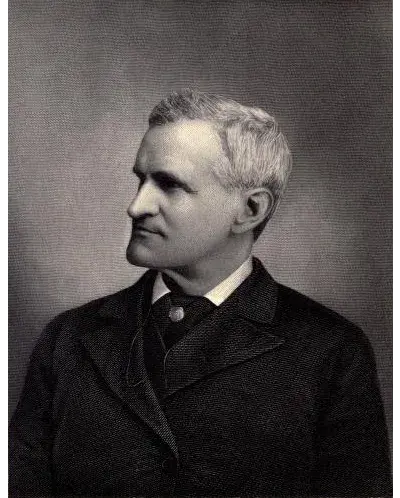
Francis Parkman Jr. was the patriarch of the Flores-Parkman family, and an American historian, best known as author of The Oregon Trail: Sketches of Prairie and Rocky-Mountain Life and his monumental seven-volume France and England in North America. These works are still valued as historical sources and as literature. He was also a leading horticulturist, briefly a professor of Horticulture at Harvard University and author of several books on the topic. Parkman wrote essays opposed to legal voting for women that continued to circulate long after his death. Parkman was a trustee of the Boston Athenæum from 1858 until his death in 1893.
