Edmund Burke Quotes
The great unwashed
Lord Brougham has also been attributed with originating this saying, see {13874}
Edmund Burke, 1729-1797, Irish Orator & Member of the British Parliament, Political Philosopher, Quoted in Safire, Safire’s Political Dictionary, 1978
Sourced by: Eigen's Political and Historical Quotations

The phrase “submerged tenth” was ironically used earlier {595222} by a great humanitarian, William Booth, 1829-1912, British Cleric & Founder of The Salvation Army to refer to the poor and the underclass of England. The Salvation Army focused on helping the submerged tenth; the Eugenics Record Office, sterilizing them. The Eugenics Record Office was an activist organization advocating the forced sterilization of those people who they deemed to be inferior from a hereditary point of view. Most Americans are today shocked to find that this organization and its ideas were so influential that more than 30 states had passed similar laws. Only California and Virginia were very zealous in carrying them out however. By 1935, 20,000 forced sterilizations had been carried out in the United States. The Supreme Court at the time even found such laws Constitutional. See {603680}.


The nobles of the city were in rebellion and fought the English Prince of Wales. When the city was taken, the poor people as well as the nobles were executed for their part in the “rebellion.” However, the poor had no say in the matter, and it was not they who ordered the city gates shut and decided to undergo a siege, which in this case was not successful. Limoges was a heavily walled city, well provisioned for a siege, but the English had miners who undermined part of the city walls and crashed them into the moat and allowed the English to walk in easily.


Ironically, it was a German democracy that later elected Adolf Hitler.

The cycle of poverty of 20th century America was not new. It has existed for centuries in most cultures and countries.
_0_thumbnail_47x47.jpg "Statue of Robert Hall in Leicester.")


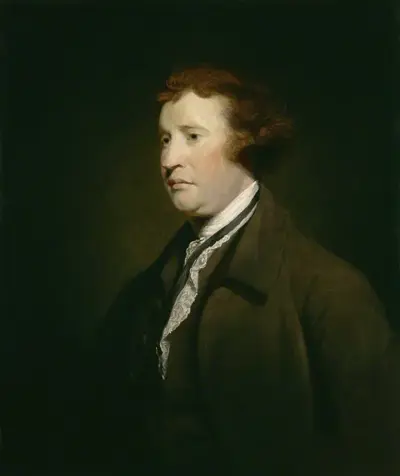
Edmund Burke was an Irish statesman, economist, and philosopher. Born in Dublin, Burke served as a member of parliament (MP) between 1766 and 1794 in the House of Commons of Great Britain with the Whig Party after moving to London in 1750.
