Augusto Roa Bastos Quotes
The great principle of Justice: prevent crime rather than punish it. All that is needed to execute a guilty man is a firing squad or a hangman. To prevent there being guilty men requires great astuteness.
Roa Bastos, Augusto. I, the Supreme. Translated by Helen Lane, Alfred A. Knopf, 1986.


There is not much difference between England then and America now.


Terror conceptually in France and some other countries was the tool the government used to inhibit criminals.


This interesting historical quotation illustrates the fact that in almost every American generation there are those who believe that society has gone too far in protecting the rights of criminal suspects at the expense of law and order in the general society. This is nothing new. This is a classic argument given by those who would deny a defendant the Constitutional protection against self-incrimination. The belief that an innocent man has nothing to fear from the police is refuted by the many cases of innocent men being convicted by evidence they have given in the belief that they were innocent, and served long jail sentences only to later be proved by DNA evidence that they could not possibly have been guilty. Since Nott’s day, society has not only found many cases where honest error was made by the police or prosecutors, but many where there was venal prosecutorial misconduct and defendants were jailed even though the authorities were aware of evidence of innocence and kept it secret. There have been a number of these cases where a defendant was on death row and about to be executed when it was found he was innocent. Probably there have been men wrongly executed. See {629444} for a probable example.


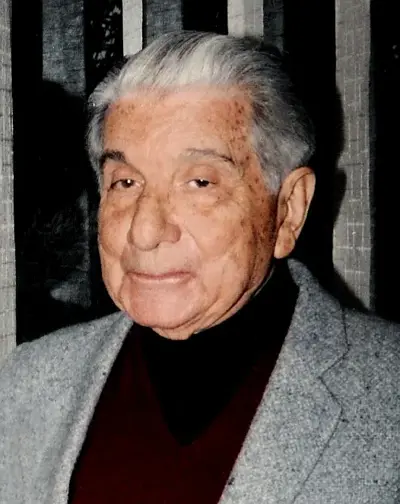
Augusto Roa Bastos was a Paraguayan novelist and short story writer. As a teenager he fought in the Chaco War between Paraguay and Bolivia, and he later worked as a journalist, screenwriter and professor. He is best known for his complex novel Yo el Supremo (I, the Supreme) and for winning the Premio Miguel de Cervantes in 1989, Spanish literature's most prestigious prize. Yo el Supremo explores the dictations and inner thoughts of José Gaspar Rodríguez de Francia, the eccentric dictator of Paraguay who ruled with an iron fist, from 1814 until his death in 1840.
