H. L. Mencken Quotes
The great masses of men, though theoretically free, are seen to submit supinely to oppression and exploitation of a hundred abhorrent sorts. Have they no means of resistance? Obviously they have. The worst tyrant, even under democratic plutocracy, has but one throat to slit. The moment the majority decided to overthrow him he would be overthrown. But the majority lacks the resolution; it cannot imagine taking the risks.
Mencken, H. L. Notes on Democracy. Alfred A. Knopf, 1926, p. 46.

This quotation is historically important because Davis clearly states the reason for the rebellion of the South. The anti-slave states were growing at a greater rate than the slave states and despite the greater voting power that a southerner had (a result of the 3/5 count of slaves for census purposes, and the Senate), the handwriting was on the wall and the majority of the United States was against the vicious institution of slavery and would make it unprofitable, impossible and/or illegal in the coming years. Southern slavery advocates saw this as a “tyranny of the majority” and therefore took up arms. In the early 20th century, apologists for the Southern rebellion tried to promote the idea that there were reasons other than slavery, but this quotation and the resolutions of the states who withdrew from the Union make it clear that the right to maintain slavery was the only significant issue. In that sense it was a States’ Rights issue, but the South was opposed to States’ Rights when it came to States refusing to return fugitive slaves when Federal Law required such under the Dred Scott Supreme Court Decision.


Those who have fought against dictatorial governments for their basic human rights, found after victory and the overthrow of the dictator, that there was another force fighting for control which would deny citizens human rights based on a theocracy. They wanted the end of the dictator so they could use their interpretation of a religion as the excuse to deny all citizens basic human rights.


Helen Keller was a remarkable woman who was blind and deaf, and yet she became a great orator and social reformer.

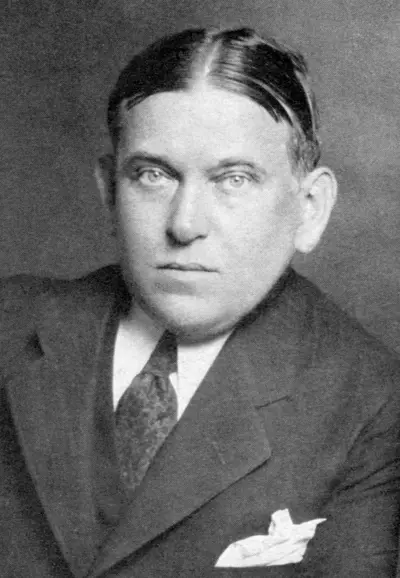
Henry Louis Mencken was an American journalist, essayist, satirist, cultural critic, and scholar of American English. He commented widely on the social scene, literature, music, prominent politicians, and contemporary movements. His satirical reporting on the Scopes Trial, which he dubbed the "Monkey Trial," also gained him attention.
