James Monroe Quotes
The great amount of our revenue and the flourishing state of the Treasury are a full proof of the competency of the national resources for any emergency, as they are of the willingness of our fellow-citizens to bear the burdens which the public necessities require.
James Monroe, 1758-1831, 5th President of the United States (Democratic Republican, VA), First Inaugural Address, March 4, 1817
Sourced by: Eigen's Political and Historical Quotations


A minority group of very conservative members of the House of Representatives had decided to hold America’s full faith and credit and the economy hostage to implementing their minority proposal to reduce government spending more than the majority wanted shortly after the 2012 election where the voters had rejected the conservative position. None the less, they were threatening to force the government to default and not pay for the items that the Congress had previously already approved by not approving a debt ceiling increase. The President was determined not to negotiate with “hostage takers” and making sure that America paid its bills for the money spent as authorized by Congress.


Although the Professor was often right about this technique, at the time he made this statement, the Clinton administration was actually cutting spending and using much of the revenue to pay for the deficit—just the opposite of what the Professor was worried about. It was successful and the deficit was eliminated and surpluses were projected. However the succeeding administration more closely followed the professor’s pattern and increased spending enormously for serious needs, but also cut taxes, so that we went during the Bush administration from the largest projected surplus in American history to the greatest deficit in American history.

In 1992 Colorado passed a Taxpayer's Bill of Rights, known as TABOR that requires that spending increases get voter approval and the state refunds surpluses through a series of tax cuts. So the state ended up with the problem that Zelinski described.


Historically, this is the occasion where the war debt from the Revolution and the War of 1812 was paid off. It was one of the few times that the nation was debt free.

“Commercial imposts” are customs duties. These actually provided virtually all of the tax revenue for the early American nation. Hamilton, realized, and prepared those who would ratify the Constitution that there would have to be additional forms of revenue of the growing nation. Nonetheless, there are a few today who argue that the customs duties are the only legitimate form of Federal taxation as that was what was in existence in early America. This quotation shows that the founding fathers did not intend that the nation be bound to that single mode of taxation.


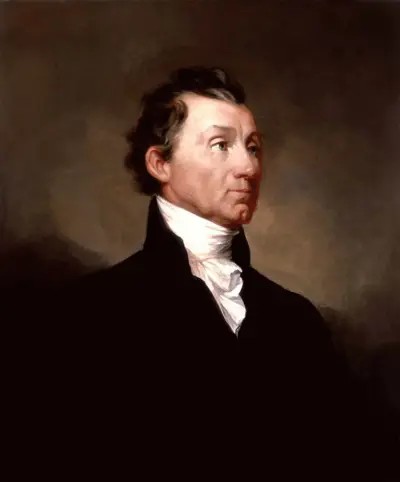
James Monroe was an American statesman, lawyer, diplomat and Founding Father who served as the fifth president of the United States from 1817 to 1825. A member of the Democratic-Republican Party, Monroe was the last president of the Virginia dynasty; his presidency coincided with the Era of Good Feelings. He is perhaps best known for issuing the Monroe Doctrine, a policy of opposing European colonialism in the Americas. He also served as the governor of Virginia, a member of the United States Senate, the U.S. ambassador to France and Britain, the seventh Secretary of State, and the eighth Secretary of War.
