John Wilkes Quotes
The government have sent the spirit of discord through the land, and I will prophesy, that it will never be extinguished, but by the extinction of their power. A nation as sensible as the English, will see that a spirit of concord, when they are oppressed, means a tame submission to injury, and that a spirit of liberty ought then to arise, and I am sure ever will, in proportion to the weight of the grievance they feel.
His public written criticism of the King and government was unheard of at the time. See {621993} for the consequence.
John Wilkes, 1747-1797, English Reformer & Member of Parliament, Lord Mayor of London, Editorial, The North Briton, April 25, 1763
Sourced by: Eigen's Political and Historical Quotations


The first sentence of this quotation was a favorite of Paine's. He had earlier used it in Common Sense in 1776. See {635451}.

“Manumitting” means the freeing of slaves. See Quotation 643600 for Laurens’ view of slavery despite the fact that he was a substantial slave owner. He was willing to lose the money represented by the value of his slaves, but most slave owners self interest was to the contrary. One of the most interesting thing about this quotation is the fact that Laurens received so much opposition from his fellow South Carolinians and other Southerners despite the fact that only Laurens would lost money by freeing his slaves. Even slave owners who wanted to do the right thing and were willing to lost the money were under enormous social and political pressure not to free slaves.

Marion was the initiator of Guerilla Warfare and he and his men traveled lightly spending much time in the South Carolina swamps. They had few supplies and when chased by the British could not stop to hunt. The British called him the “Swamp Fox”. The American colonists at this point still thought of the British as “their countrymen.”

The Diggers were a religious-economic movement that even today would be considered very radical. They advocated the right of the poor to go onto public lands and farm them—thus the name “Diggers.” Beyond their opposition to the private ownership of land to the exclusion of the poor, Winstanley and the Diggers promulgated another very modern doctrine: That the poor should take the responsibility and have the right to determine how the society should provide for the poor. A version of this became one of the Mottos of the Poverty Program of 1964. See {616966}.


Although Wedgwood was a business man and ceramic manufacturer, he was a staunch abolitionist. He made these medallions by the thousands and gave them to all who would receive them. The text became the motto of the anti-slavery society. It was one of the first examples of a logo – a symbol for a political cause being very effective.


Charles I had caused the death of his subjects with impunity and was called to account. However, the English Parliament did not know what specific crime the King had committed. Kings had executed people, guilty of crimes and otherwise, for centuries. For what could a king be accountable. Cooke developed the crime of Tyranny and drew up and presented the indictment for that. The King was found guilty and executed. This was the first time in legal history that a ruler was called to account for crimes committed against his own people. It became the foundation for many trials thereafter including that of Saddam Hussein in 2006.


Because of its countenance of slavery he called the U.S. Constitution. He then burned a copy saying: He had actually penned the first phrase for a resolution of the Massachusetts Anti-Slavery Society on January 27, 1843.

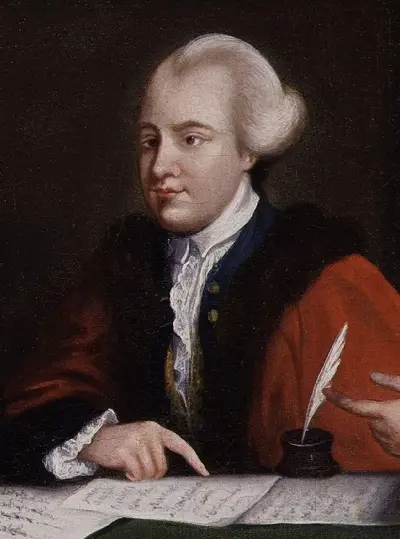
John Wilkes FRS was a British radical journalist and politician, as well as a magistrate, essayist and soldier. He was first elected a Member of Parliament in 1757. In the Middlesex election dispute, he fought for the right of his voters—rather than the House of Commons—to determine their representatives. In 1768, angry protests of his supporters were suppressed in the St George's Fields Massacre. In 1771, he was instrumental in obliging the government to concede the right of printers to publish verbatim accounts of parliamentary debates. In 1776, he introduced the first bill for parliamentary reform in the British Parliament.
