Franz Halder Quotes
The Führer confirms my impressions of yesterday. He would like an understanding with Great Britain. He knows that war with the British will be hard and bloody, and knows also that people everywhere today are averse to bloodshed.
Halder, Franz. The Halder War Diary 1939-1942. Edited by Charles Burdick and Hans-Adolf Jacobsen, Presidio Press, 1988, entry for 14 August 1939.


Clinton was one of the leaders of the anti-war movement of the day. He even ran for President on the new “Peace Party.” New England, New York and many people in the Atlantic states thought the war of 1812 absurd. In reality, while the law was good for American morale and national pride, the casualties we suffered and the cost was far greater than what we were losing in our dispute with England. In actuality, France (under Napoleon) was offending America and seizing our shipping more than England. Note that Clinton was advocating negotiation even AFTER we would be attacked. This is in a way the complete opposite of the George W. Bush doctrine of preemption—attacking a hostile state BEFORE it has attacked us so as to prevent the casualties of an attack. The Bush doctrine was a great blunder in its only implementation—Iraq did NOT have the weapons of mass destruction that Bush and his administration claimed they had to justify the preemptive war.


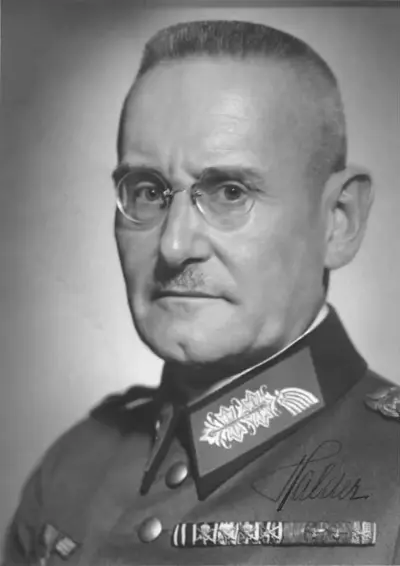
Franz Halder was a German general and the chief of staff of the Army High Command (OKH) in Nazi Germany from 1938 until September 1942. During World War II, he directed the planning and implementation of Operation Barbarossa, the 1941 invasion of the Soviet Union. Halder became instrumental in the radicalisation of warfare on the Eastern Front. He had his staff draft both the Commissar Order (issued on 6 June 1941) and the Barbarossa Decree (signed on 13 May 1941) that allowed German soldiers to execute Soviet citizens for any reason without fear of later prosecution, leading to numerous war crimes and atrocities during the campaign. After the war, he had a decisive role in the development of the myth of the clean Wehrmacht.
