Wilhelm Reich Quotes
Make it plain that you have no time for war, that you have more important things to do....let the diplomats and marshals of the earth shoot each other.
Reich, Wilhelm. Listen, Little Man!. Farrar, Straus and Giroux, 1971, p. 101.


Clinton was one of the leaders of the anti-war movement of the day. He even ran for President on the new “Peace Party.” New England, New York and many people in the Atlantic states thought the war of 1812 absurd. In reality, while the law was good for American morale and national pride, the casualties we suffered and the cost was far greater than what we were losing in our dispute with England. In actuality, France (under Napoleon) was offending America and seizing our shipping more than England. Note that Clinton was advocating negotiation even AFTER we would be attacked. This is in a way the complete opposite of the George W. Bush doctrine of preemption—attacking a hostile state BEFORE it has attacked us so as to prevent the casualties of an attack. The Bush doctrine was a great blunder in its only implementation—Iraq did NOT have the weapons of mass destruction that Bush and his administration claimed they had to justify the preemptive war.

Theodore Roosevelt was the Presidential nominee. Johnson was a leader of some members of Congress some of whom were extreme isolationists and some of whom were Nazi sympathizers and Hitler admirers. When the Japanese attacked Pearl Harbor later that year, Germany, fulfilling its treaty with Japan, declared war on America, Johnson’s group no longer mattered. Before WWII most Republicans were opposed to Defense Spending and accused the Democrats of being war hawks. After WWII, they flip flopped and became more hawkish than the Democrats who they accused of being soft on defense for years thereafter. See {631380} for President Roosevelt’s different view.


When there is a serious problem with another country and it appears that military force may have to be used, he and most sophisticated policy makers argue that we should always try diplomacy first. If that does not work, then the military option is still open. If it does work, war or other military action is always available as an option. When politicians do not want to try diplomacy, it is usually that they have an ulterior motive for war and/or military force. Some urge caution with this principle in all cases as sometimes it gives the enemy time to regroup and rearm and he gets stronger by stringing out the negotiations with no intention of a diplomatic solution. In some other cases, as Iran in the second decade of the 21st century when they were suspected of developing a nuclear weapon. The Israeli right wing and some American conservatives wanted no delay in use of military force as that might allow the Iranians to complete an operational message. President Obama and most Americans favored strong economic sanctions with diplomacy first.
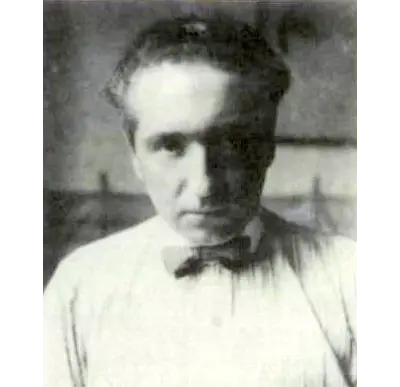
Wilhelm Reich was an Austrian doctor of medicine and psychoanalyst, a member of the second generation of analysts after Sigmund Freud. The author of several influential books, most notably Character Analysis (1933), The Mass Psychology of Fascism (1933), and The Sexual Revolution (1936), Reich became known as one of the most radical figures in the history of psychiatry.
