Mao Zedong Quotes
The forces of rural democracy have risen to overthrow the forces of rural feudalism. The patriarchal-feudal class of local tyrants, evil gentry and lawless landlords has formed the basis of autocratic government for thousands of years and is the cornerstone of imperialism, warlordism and corrupt officialdom. To over-throw these feudal forces is the real objective of the national revolution. In a few months the peasants have accomplished what Dr. Sun Yat-sen wanted, but failed, to accomplish in the forty years he devoted to the national revolution. This is a marvelous feat never before achieved, not just in forty, but in thousands of years.
In 1927 there was a Peasant Uprising in the Hunan Province of China. Young Mau went there and wrote a report.
Mao Tse-Tung, 1893-1976, Chairman, Communist Party, China, Report On An Investigation Of The Peasant Movement In Hunan, 1927
Sourced by: Eigen's Political and Historical Quotations

There had been a Chinese Revolution in 1911, but although there were changes at the seat of government and in urban areas, the rural areas where most of the people lived changed little if at all. The revolution failed as a result of it became a revolution without reform.


In 1927 there was a Peasant Uprising in the Hunan Province of China. Young Mau went there and wrote a report.


Those who have fought against dictatorial governments for their basic human rights, found after victory and the overthrow of the dictator, that there was another force fighting for control which would deny citizens human rights based on a theocracy. They wanted the end of the dictator so they could use their interpretation of a religion as the excuse to deny all citizens basic human rights.


In 1905, she and her husband—young, intellectual middle class, revolutionists from Moscow—escaped from the Czar’s secret police and emigrated to America where until 1917, she feared assassination by Czarist agents in America. After the Civil Rights Act and the Voting Rights Act were passed, she felt that all her utopian, communist dreams had been fulfilled--in America. But Russia, in many ways, were as bad then as in the days of the Czars. See {634475} and {634476} for her views on communism. Many of the American “leftist communists” were great admirers and lovers of America except for the legal and governmental support of segregation. When that went, America was their ideal.

Vladimir Lenin
The revolutionists were disorganized and unfocused after the Coup that brought them to power. This speech provided some focus for a while. Early in his career, as a Journalist working in Leiden, Holland, he was very active and helpful to the Dutch Patriots and Revolutionaries in their takeover of the government. He helped draft the New Dutch Constitution and participated in most of the new governments conventions.

After the first Arab Spring revolution ousting Mubaric, a military dictator, the Egyptians elected a leader, Morsi, of the Muslim Brotherhood. Morsi then abused his powers and tried to turn Egypt into a theocracy. Huge popular protests against the Muslim Brotherhood led to el-Sisi leading a military coup where the army took over the government. Then they held elections, el-Sisi resigned from the military, and ran for President and won by a large percentage even though a small proportion of the population voted.


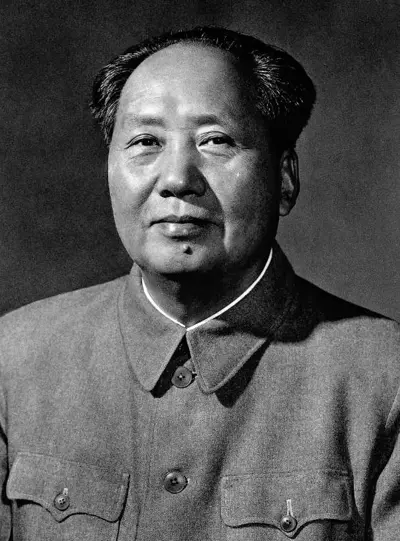
Mao Zedong, also known as Chairman Mao, was a Chinese communist revolutionary who was the founder of the People's Republic of China (PRC), which he ruled as the chairman of the Chinese Communist Party from its establishment in 1949 until his death in 1976. Ideologically a Marxist–Leninist, his theories, military strategies, and political policies are collectively known as Maoism.
