William White Quotes
The first occasion since the conquest of Constantinople by the Turks on which Christians have dared resist soldiers in Stamboul.
Refering to a protest in Erzurum, Turkey, where Armenians demonstrated for Human Rights, Summer 1890
William White, British ambassador to Turkey, Quoted in Peter Balakian, The Burning Tigris
Sourced by: Eigen's Political and Historical Quotations

In 1453 the Ottoman Turks shocked Christendom by capturing Constantinople, the capital of the Byzantine Eastern Christian Empire. It was always perceived as a religious conflict between Christians and Muslims but that is an over simplification of a very complex sociological, religious, and political historical period. As this quotation shows us there were many Christians aiding the Muslim side. There were also many Muslims fighting on the Christian side.

In one of the historical ironies of the 12th century, a Christian sect preferred the rule of the Muslims than their Christian brethren—on the grounds of religious tolerance. It illustrates the changes that take place over time. By the 21st century, it was the Christians who were thought of as tolerant and the Muslims as the opposite.
When the Turks defeated the Christians, the only explanation many Christians could conceive of was that God was on the side of the Turks.


He is a Greek Orthodox Christian, and he correctly observes that the Islamic world was considerably more tolerant than the Christian until the 18th century when Islam had become less tolerant in the Middle East while the Christians were modernizing and going through a cultural and intellectual enlightenment and societal modernization while the Muslims, became less tolerant than they were in earlier years leading to the modern situation.
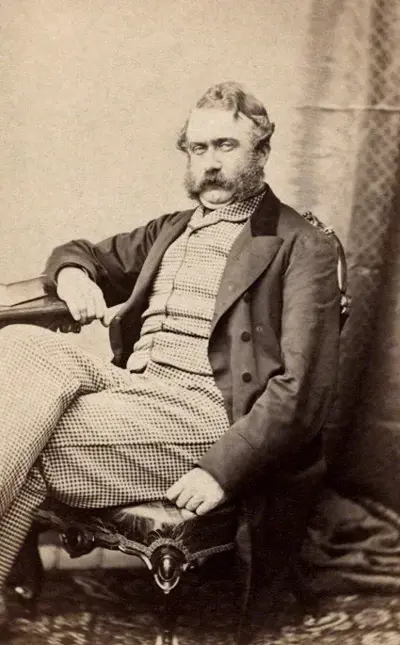
Sir William Arthur White GCB GCMG PC was a British diplomat. White entered the diplomatic service in 1857 at the age of 33, and between 1857 and 1886 had postings in Warsaw, Danzig, Belgrade, and Bucharest. In 1886 he was given the ambassadorship in Constantinople, which he held for five years until his death on 28 December 1891 at the age of 67.
