William Hazlitt Quotes
The fear of punishment may be necessary to the suppression of vice; but it also suspends the finer motives to virtue.
William Hazlitt, 1778-1830, English Writer, Characteristics
Sourced by: Eigen's Political and Historical Quotations


There is always a tendency of legislators to attempt to legislate morality. Many people used this quotation to question the religiously supported laws like blue laws, cursing, nudity and the like.

Spinoza’s ideas were considered so radical and dangerous that he was the only man in history who was excommunicated by the Catholics, the Jews and the Muslims.

Dodge was a hotbed of violence, gun-fighting, drinking, gambling and prostitution. At one point they had 19 saloons serving liquor for a total population of only 1200. The Governor wrote this letter to the mayor to get things under control. The mayor, also one of the town’s successful business men, was doing very well and was apposed to changing the status quo. He wrote a return letter {587195} to the mayor to get things under control. The mayor, also one of the town’s successful business men, was doing very well and was apposed to changing the status quo. He wrote this return letter trying to convince the governor to let him deal with things. Others accused him of being in cahoots with the violent element of town and an apologist for the worst elements of the community.

He is remembered today as the "Hanging Judge" of the American Old West. See {640210}.


Terror conceptually in France and some other countries was the tool the government used to inhibit criminals.


The “foreign tribes” were the English and other European traders who were bringing opium to China. Lin had assembled a fleet of 80 ships at the mouth of the Pearl River to persuade the European powers that they would fight if the foreign ships would not cease trading in opium. The British in particular were not intimidated, and they militarily forced the Chinese to accept their “right” to sell opium. The Emperor sent Lin to the “boondocks”—see {621320} for misjudging and provoking British military action, but Lin is remembered for his sound moral and public health perspective. A bronze statue of Lin Zexu was erected in his honor in Chatham Square (Kimlau Square) of New York City's Chinatown and many other places in the world.

Charles Dickens himself, a true nineteenth-century liberal, lent his weight to the campaign to abolish public executions. After seeing the execution of Maria and Frederick Mannings for murdering Maria’s lover, Patrick O’Connor, in Horsemonger Lane, outside the Surrey County Gaol on 13 November 1849, he wrote this to the Times. Public hangings were abolished in 1868. The last one took place outside Newgate Prison on 26 May of that same year. The man hanged was an Irish terrorist called Michael Barratt who had blown up the Clerkenwell House of Detention killing six people. A drunken crowd stayed up all night to witness the execution. They cheered wildly when the scaffold was brought out at dawn. More people – mainly young women and children – began to arrive. By the time a bell was sounded at eight o’clock in the morning to announce the arrival of the condemned man, the crowd stretched back as far as Smithfield.


In American law, there must be a criminal intent to prove guilt of a crime. If someone is coerced, the absence of criminal intent would usually exonerate him.


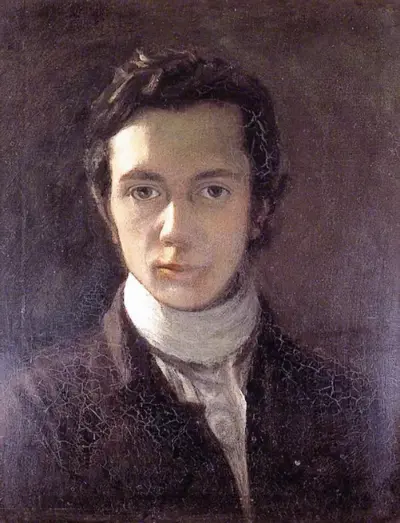
William Hazlitt was an English essayist, drama and literary critic, painter, social commentator, and philosopher. He is now considered one of the greatest critics and essayists in the history of the English language, placed in the company of Samuel Johnson and George Orwell. He is also acknowledged as the finest art critic of his age. Despite his high standing among historians of literature and art, his work is currently little read and mostly out of print.
