John Locke Quotes
Those children who have been most chastised seldom make the best men.
John Locke, 1632-1704, English Political Philosopher, Some Thoughts Concerning Education
Sourced by: Eigen's Political and Historical Quotations

This seems to be the first instance of the famous dictum.

This Biblical passage is often used by fundamentalists who claim that any child abuse laws limiting their right to discipline their children is an unconstitutional interference with their religious duty. Even in the early American colonies this was an issue. See Cotton Mather: {612010}


Spock’s book on parenting has sold more copies than any other book with the exception of The Bible.


This quotation has caused a great deal of conflict between some parents and local governments. In many states, beating a child with a “rod” of other implement is a crime—often a felony. Religious fundamentalist parents insist on their right to bring up their children in accordance with “God’s law”. In American society generally, we have decided that children’s safety and rights trumps the Bible where there are conflicts. Spanking with an open hand in moderate amounts is generally considered legal although most child development experts counsel against it as it models a resort to violence and tends to culturally perpetuate itself over generations. See {642236} and {642235}.


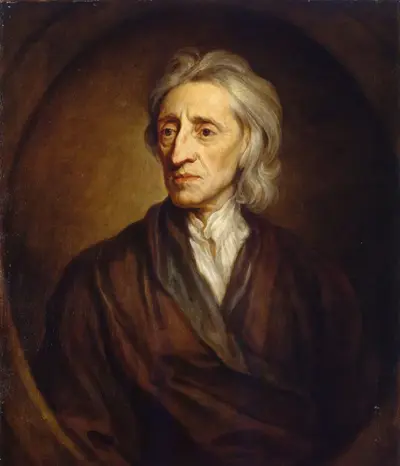
John Locke FRS was an English philosopher and physician, widely regarded as one of the most influential of Enlightenment thinkers and commonly known as the "Father of Liberalism". Considered one of the first of the British empiricists, following the tradition of Sir Francis Bacon, Locke is equally important to social contract theory. His work greatly affected the development of epistemology and political philosophy. His writings influenced Voltaire and Jean-Jacques Rousseau, and many Scottish Enlightenment thinkers, as well as the American Revolutionaries. His contributions to classical republicanism and liberal theory are reflected in the United States Declaration of Independence.
