John Calvin Quotes
The Fanaticism which discards the Scripture, under the pretense of resorting to immediate revelations is subversive of every principle of Christianity. For when they boast extravagantly of the Spirit, the tendency is always to bury the Word of God so they may make room for their own falsehoods.
Calvin, John. Institutes of the Christian Religion. Translated by John Allen, vol. 1, Presbyterian Board of Publication, 1841, p. 94.


Christians of 1 thousand years ago were barbarous and immoral compared to Christians of today, even though their Bible is the same. He argued that Islam may well also reform. In looking at Islam compared with Judaism, Christianity, Hinduism and Buddhism, it is useful to remember that these are much older religions than Islam. They have had more time to reform and develop. Compare Christians 700 years ago to Christians today. They were pretty barbaric in comparison. They burned heretics at the stake and "witches" also. But Islam is 700 years younger than Christianity and thousands of years younger than the other 3 religions mentioned. It may well need more time to develop and reform.


He was referring to President George W. Bush, who was not only a fundamentalist, born again Christian himself, but included people in his administration and as beneficiaries of his administration specifically because they were religious fundamentalists and in some cases kept other out even filtering for religious belief in the civil service jobs of the Justice Department itself.

The description of Buddhists, Christians, and Communists as “fanatics” is one of the many degradations of others by the Scientology founder.
The Radical Religious Right in America did not have its origins as a reaction to the 1960s as some believe. It was present among the Know Nothings in the 19th Century, the KKK in the aftermath of Reconstruction, and during the Second World War.


This statement is eerily similar to the statements of some of the Islamic fanatic fundamentalists 80 years later.


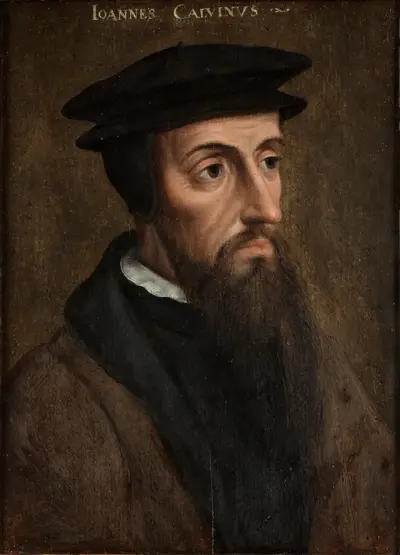
John Calvin was a French theologian, pastor and reformer in Geneva during the Protestant Reformation. He was a principal figure in the development of the system of Christian theology later called Calvinism, aspects of which include the doctrines of predestination and of the absolute sovereignty of God in salvation of the human soul from death and eternal damnation, in which doctrines Calvin was influenced by and elaborated upon the Augustinian and other Christian traditions. Various Congregational, Reformed and Presbyterian churches, which look to Calvin as the chief expositor of their beliefs, have spread throughout the world.
