Sam Harris Quotes
We talk about extremist religious fundamentalists at the fringes of society, but today we have extremist religious fundamentalists at the fringes of the Oval Office.
He was referring to President George W. Bush, who was not only a fundamentalist, born again Christian himself, but included people in his administration and as beneficiaries of his administration specifically because they were religious fundamentalists and in some cases kept other out even filtering for religious belief in the civil service jobs of the Justice Department itself.
Sam Harris, Philosopher and Commentator, Speech, University Synagogue, Irvine California, January 18, 2005
Sourced by: Eigen's Political and Historical Quotations


Munir was a strong advocate for civilian control over the military and as exposed many military atrocities and disappearances. He was poisoned on a Garuda Airlines flight to Holland where he was exposing more of the human rights violations of the Indonesian Military.

Bashir advocates adapting Sharia—Islamic Law—for all people in Indonesia—regardless of their religion or their preference for separation of church and state. This is diametrically opposite to an Islamic Syrian poet of 1000 years ago—see {624477}. Many Muslims have become more intolerant than some of their earlier scholars. Bashir also differs from most Indonesian Muslims who have historically not shared his bigotry and intolerance.

Reading this quotation, one would think that it was uttered in the early 21st century when the Christian Fundamentalists drove Christian liberals out of many of the evangelical churches and out of the Republican Party. However, this process and conflict has been ongoing for almost a century. This quotation was made in 1922.


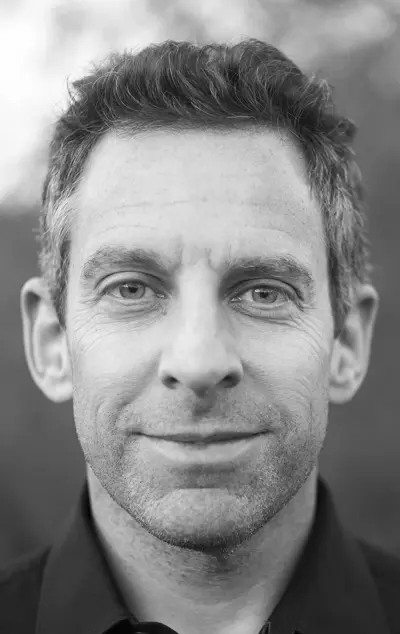
Samuel Benjamin Harris is an American author, philosopher, neuroscientist, and podcast host. His work touches on a wide range of topics, including rationality, religion, ethics, free will, neuroscience, meditation, psychedelics, philosophy of mind, politics, terrorism, and artificial intelligence. Harris came to prominence for his criticism of religion, and Islam in particular, and is described as one of the "Four Horsemen of the Non-Apocalypse", along with Richard Dawkins, Christopher Hitchens, and Daniel Dennett.
