Charles Trevelyan Quotes
The famine has been sent by God to teach the Irish a lesson.... The real evil with which we have to contend is not the physical evil of the famine, but the moral evil of the selfish, perverse and turbulent character of the people.
During the Irish Potato the official who was in charge of the relief program was a highly religious, fundamentalist Christian who believed that the famine was God’s retribution.
Charles Trevelyan, 1807–1886, British Colonial Administrator, Official in charge of Relief in the Irish Potato Famine
Sourced by: Eigen's Political and Historical Quotations


What Niebuhr assumed as the belief of all politicians in democracies, and was since the founding of America, was suddenly questioned and changed by President George W. Bush in his attack on Iraq to preempt the use of weapons of mass destruction. In the War on Terror, many Americans reconsidered this fundamental principle.

Reflection on the Irish Potato Famine of 1845-1850


This fiery statement got Mitchel sent to a penal colony in Australia from which he escaped and came to the United State. It was essentially true. Despite the potato famine in much of Ireland, there was a constant supply of different foods exported from Ireland to England. There were many ways that they Irish could have had food, but they all required some money and there was a massive depression with many Irish out of work and also unable to grow potatoes. The “political philosophy” of the English rulers of Ireland however precluded any kind of welfare, relief or food assistance—see {636214}.


Executed by the English for his part in the Easter Uprising.
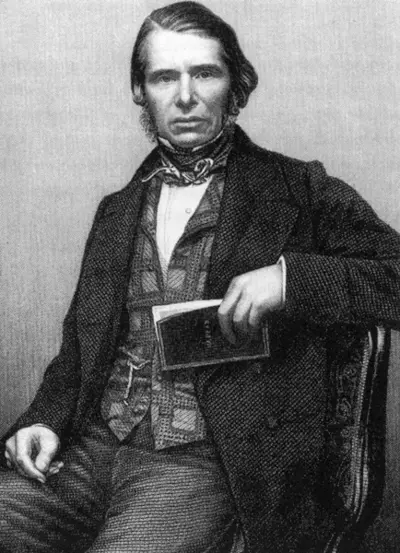
Sir Charles Edward Trevelyan, 1st Baronet, KCB was a British civil servant and colonial administrator. As a young man, he worked with the colonial government in Calcutta, India; in the late 1850s and 1860s he served there in senior-level appointments. Trevelyan was instrumental in the process of reforming the British Civil Service in the 1850s.
