John C. Calhoun Quotes
The error is in the assumption that the General Government is a party to the constitutional compact. The States ... formed the compact, acting as sovereign and independent communities.
Calhoun, John C. A Discourse on the Constitution and Government of the United States. Edited by Richard K. Crallé, A.S. Johnston, 1851, p. 275.


When the 13 states were united only by the loose bonds of the Confederation, Jefferson wrote:


Soon after Jackson's reelection, delegates from South Carolina, led by John C. Calhoun, moved quickly to declare "null, void, and no law" the Tariff Act of 1832. The president's reaction to the Ordinance of Nullification was swift.

On June 12, 1789 a Senate committee proposed a federal court system for the nation. Maclay described it as:


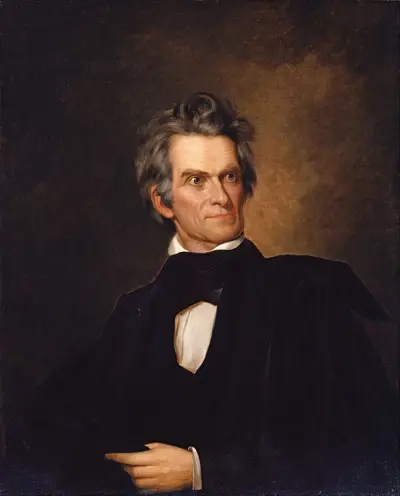
John Caldwell Calhoun was an American politician and political theorist from South Carolina who held many important positions including being the seventh vice president of the United States from 1825 to 1832, while adamantly defending slavery and protecting the interests of the white South when its residents were outnumbered by Northerners. He began his political career as a nationalist, modernizer, and proponent of a strong national government and protective tariffs. In the late 1820s, his views changed radically, and he became a leading proponent of states' rights, limited government, nullification, and opposition to high tariffs. He saw Northern acceptance of those policies as a condition of the South remaining in the Union. His beliefs and warnings heavily influenced the South's secession from the Union in 1860–1861.
