William Maclay Quotes
a vile law system, calculated for expense and with a design to draw by degrees all law business into the Federal Courts. The Constitution is meant to swallow all the State Constitutions by degrees.
On June 12, 1789 a Senate committee proposed a federal court system for the nation. Maclay described it as:
William Maclay, 1737-1804, U. S. Senator (Democrat, PA), Quoted in Warren, The Supreme Court in United States History, 1935
Sourced by: Eigen's Political and Historical Quotations

President John Adams Alien and Sedition Acts were amongst the worst laws ever passed in America. It totally violated the First Amendment but at the time the Supreme Court had not ruled on the laws which prohibited criticizing the government. Ironically, it was Adams’s son, John Quincy Adams who finally led the repeal effort.


This is a classic type of fallacious political logic. The author claims that there are no powers in the constitution to make laws in a number of important areas of our society. What is true, is that there is no explicitly and uniquely specified statements in the Constitution regarding the areas he specified (and some he didn’t like education). However the power to make laws in these areas comes from the “Commerce Clause” where the Federal Government was given the power to regulate Interstate Commerce. And that is what the Federal Government does make laws about. Food that is sold in the state where it is grown is regulated by the states. But interstate agriculture is. Medicines and weapons are also sold and transported in interstate commerce. Even housing is in part covered as financing and mortgages, building materials, working conditions of the building companies are part of Interstate Commerce. A succession of Congresses have recognized this and so has every Supreme Court in our history. McManus however believes that all these legislators and judges have been wrong and worse, part of a conspiracy to subvert the Constitution. See {630683} for his tendency to see conspiracies in politics.


This is the opinion that established the supremacy of the Supreme Court over state courts in Constitutional matters. There was an alternative view then that states were sovereign entities and their courts decisions could not be reviewed or overridden by the Federal courts. This case settled that issue,

One of the conundrums of our constitutional system is who has the last word as to what the Constitution means. Essentially it is the judicial branch headed by the Supreme Court. But there are those who believe that the current popular majority should have a say in what is or is not constitutional. If so the legislative branch should have the last word. Still others say that the President is the only person elected by ALL the people, so his opinion most reflects the will of the public. And then there are most who argue that the Constitutional system was created just to avoid the power of currently popular majorities, and the courts should decide based on the Constitution itself. So the statement has very little meaning except that Phillips thinks that the courts have too much power. Whoever gets to decide what is or is not Constitutional will be accused of being “over” the Constitution by those who don’t like the decisions. In our system, that is the courts.
The 10th Amendment was created to take care of this objection which Jefferson and many others had.


Jackson was reacting to the claimed right of South Carolina to nullify Federal tariffs and other Federal laws.
Soon after Jackson's reelection, delegates from South Carolina, led by John C. Calhoun, moved quickly to declare "null, void, and no law" the Tariff Act of 1832. The president's reaction to the Ordinance of Nullification was swift.


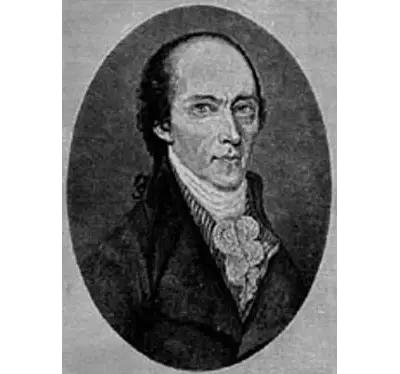
William Maclay was a politician from Pennsylvania during the eighteenth century. Maclay, along with Robert Morris, was a member of Pennsylvania's first two-member delegation to the United States Senate. Following his tenure in the Senate, he served in the Pennsylvania House of Representatives on two occasions, as a county judge, and as a presidential elector. He is known for his journal providing historical information on the 1st United States Congress.
