Fouad Ajami Quotes
The end of despots is always odd?exhilarating to those who suffered their tyrannies, and to those who hold despotism in contempt, and anti-climatic at the same time, the discovery that these tyrants were petty, frightened men after all.
Ajami, Fouad. The Foreigner's Gift: The Americans, the Arabs, and the Iraqis in Iraq. Free Press, 2006.

This quotation was extremely damaging to Russian Communism at the time. Goldman had been extremely supportive of the initial Russian Revolution and was an enthusiastic Marxist. She was not the typical conservative who would attack the revolution no matter what the outcome.


Prevented by the Military from ever taking office. She was commenting on recent attacks against minority Muslims by the majority Buddhists and one of the major reasons she claimed was the lack of trust in the Muslim community that had developed during the period of military dictatorship.


Historically, most dictators have announced their worst intentions and in many cases were not believed by much of the world who then learned that they had made a serious error.

Bartolo was the most famous legal expert of his day and for many years thereafter as he died at the age of 44—the height of his career. In Italy, Spain and other nations of Europe there were statutes passed that said if there was no precedent in Roman Law, the writings of Bartolo should dictate the law.

The dictator that he thought Russia needed, Stalin, turned on him in 1937 for not agreeing with Stalin enthusiastically enough, had a 1 day trial for treason, and executed the best military man in the country despite the fact that Russia would need its military to fight the German invasion.


Soon he had the power of a dictator but he didn’t force his will on the vast majority of the Cubans. His decrees made all the wealthy and the cronies of the dictator Batista outraged and most of them left Cuba. He was a dynamic demagogue and the people handed him dictatorial powers which he did not reject. He was so popular that he was the only leader in the Americas who would give 4 hour speeches and move through the streets without any bodyguards until the United States and dissident expatriates tried to assassinate him. With all that popularity, none the less he would not allow open criticism of his regime and jailed many political opponents. So he indeed became a dictator but never needed the machine gun to maintain power.
The “Dear Leader” was the name the North Koreans used for ruler Kim Jong-il, 1941-2011.


At the time of this statement most people thought that Bush was joking. But by the end of his Presidency many looked back on the quote and thought that Bush had such preferences. He unilaterally took the country into the Iraq War and assumed Presidential Powers that no other president had ever attempted. Most serious, his administration actually took the formal legal position that the President did not have to obey the law if he unilaterally thought that it was not in the nation’s interest from the point of view of the Commander in Chief. So many debate whether this quotation was a light hearted joke of a harbinger of his real feelings about the Presidency.
He served a 20 year sentence. Unlike many of the other Nazis, upon reflection of his experience, he came to realize the wisdom of Lord Acton’s observation about power. See {292904}.


With so many revolutionary rulers of new nations suppressing all opposition, the history of Ataturk and Turkey is unique. Ataturk was so popular and his People’s Party so successful that there was no opposition and Turkey had one party rule. However, Ataturk was determined to have Turkey become a parliamentary democracy as good as the Western nations of Europe. So a tradition of multi-party democracy was needed. So Ataturk actually went to his friend Fethi Okyar and asked him to start an opposition party and oppose the government. Fethi was a strong supporter of the revolution and generally was in concurrence with Ataturk and the People’s Party on everything. Ataturk however convinced him that they had to start a tradition that would take Turkey through the future, and he did create a new party-- Serbest Cumhuriyet Fırkası (Liberal Republican Party) and worked hard to find differences with the People’s Party and the Government. One immediate contribution was the oversight that the new party provided—a strong tradition that exists to this day in Turkey.


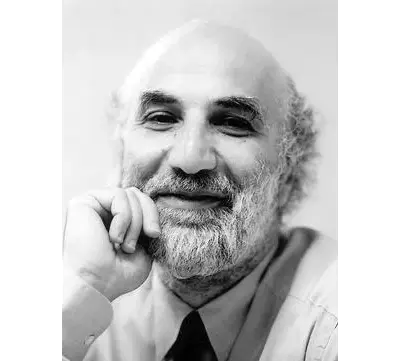
Fouad A. Ajami was a MacArthur Fellowship winning, Lebanese-born American university professor and writer on Middle Eastern issues. He was a senior fellow at Stanford University's Hoover Institution.
