Anna Garlin Spencer Quotes
The earth is ready, the time is ripe, for the authoritative expression of the feminine as well as the masculine interpretation of that common social consensus which is slowly writing justice in the State and fraternity in the social order.
Spencer, Anna Garlin. Woman's Share in Social Culture. Mitchell Kennerley, 1912, p. 317.


Mount Holyoke College was one of the finest women’s colleges. This line drew applause, although as we look back on it, the statement seems hypocritical. Women at the time could not vote and in some states even own property. They could not serve in the military and were barred from most executive and technical jobs, government as well as private. President McKinley was not a public advocate for women’s rights or equality. He was however, at least in favor of higher education for women—something which many politicians opposed at the time.


Jinnah was a modern Islamist who saw the role of females in a modern context. He, like the Indian Hindu leaders were in a sense products of the West and Western government and education. He would be very surprised that in his Pakistan men can murder their female relatives who they believe have dishonored the family, or that women would not be educated in the Madrassas, or that authorities could sentence a female relative of a man deemed guilty of seduction to be gang raped, but that is what happens in modern Pakistan. Jinnah and many of the early leaders believed that their new government could modernize Islam but the control and influence went the other way. Pakistan became a religiously dominated autocracy rather than the democracy that Jinnah foresaw.

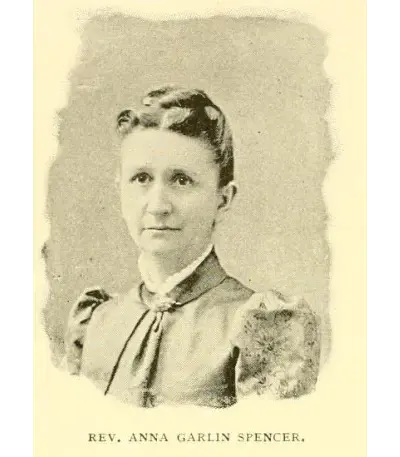
Anna Garlin Spencer was an American educator, feminist, and Unitarian minister. Born in Attleboro, MA, she married the Rev. William H. Spencer in 1878. She was a leader in the women's suffrage and peace movements. In 1891 she became the first woman ordained as a minister in the state of Rhode Island. In Providence she was commissioned to develop the Religious Society of Bell Street Chapel which was to be devoted to the religious outlook of James Eddy. She compiled Eddy's views into a Bond of Union to which members of the new society would subscribe. She was later associated with the New York Society for Ethical Culture (1903–1909) and the New York School of Philanthropy (1903–1913).In 1909, she signed on to the call to found the National Association for the Advancement of Colored People. Over a long period she was a popular lecturer and wrote on social problems, especially concerning women and family relations. Her writings include Woman's Share in Social Culture (1913) and The Family and Its Members (1922).
