Lucy Stone Quotes
The idea of equal rights was in the air.
Blackwell, Alice Stone. Lucy Stone: Pioneer of Woman's Rights. Little, Brown, and Company, 1930, p. 41.


As hard as it is for us to imagine today, while her husband was President of the United States, the First Lady wrote a nationally syndicated newspaper column every single day with politics frequently the subject. While she usually agreed with the President, there were occasions where they seemed to not see things exactly the same. She tended to be more liberal than he. However, there were those who believed that when she criticized politicians, it was with FDR’s knowledge and blessing and she sometimes did his “dirty work.” Eleanor Roosevelt was one of the most influential people in the country—certainly more-so than any First Lady before and since.

Although the situation improved over time, all employers do not pay equal wages, although the laws now require equal pay.


This was the first major civil rights speech. He had previously in his political career tread carefully in the civil rights arena. The Southerners had disproportionate control over the Congressional committee chairmanships and they could hold up his entire legislative agenda. JFK’s father was a right wing fascist who supported Hitler earlier and always advised against pushing civil rights.

This remarkable statement was written in about 1840 and there was probably then few people of either gender who would think such a thing possible.


Mount Holyoke College was one of the finest women’s colleges. This line drew applause, although as we look back on it, the statement seems hypocritical. Women at the time could not vote and in some states even own property. They could not serve in the military and were barred from most executive and technical jobs, government as well as private. President McKinley was not a public advocate for women’s rights or equality. He was however, at least in favor of higher education for women—something which many politicians opposed at the time.


The Bible and the Church have been the greatest stumbling blocks in the way of women’s emancipation.
The most important documents and doctrine of most churches were created by men who also established the framework of the religion. The result has in almost all cases been a sexist structure with women having not only little power not typically females are banned from all church governance. See {640303} for her quote on religion in general vis a vis women.


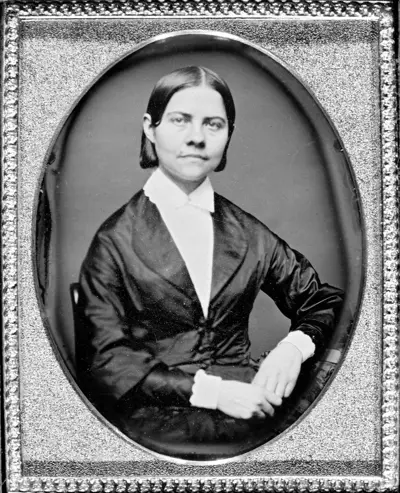
Lucy Stone was a prominent U.S. orator, abolitionist, and suffragist, and a vocal advocate and organizer promoting rights for women. In 1847, Stone became the first woman from Massachusetts to earn a college degree. She spoke out for women's rights and against slavery. Stone was known for using her birth name after marriage, the custom being for women to take their husband's surname.
