Agnes Macphail Quotes
If they are willing to give women economic freedom in that home, if they are willing to live by the standard they wish women to live by, then homes will be preserves.
Canada, Parliament, House of Commons. House of Commons Debates. 14th Parliament, 4th Session, Vol. 1, F.A. Acland, 1925, p. 559.


Jinnah was a modern Islamist who saw the role of females in a modern context. He, like the Indian Hindu leaders were in a sense products of the West and Western government and education. He would be very surprised that in his Pakistan men can murder their female relatives who they believe have dishonored the family, or that women would not be educated in the Madrassas, or that authorities could sentence a female relative of a man deemed guilty of seduction to be gang raped, but that is what happens in modern Pakistan. Jinnah and many of the early leaders believed that their new government could modernize Islam but the control and influence went the other way. Pakistan became a religiously dominated autocracy rather than the democracy that Jinnah foresaw.


This remarkable statement was written in about 1840 and there was probably then few people of either gender who would think such a thing possible.


Vladimir Lenin. This is a classic Lenninism where he argues that the basic principles of Communism solve all problems. He never explains how the abolition of private property would lead to female freedom and independence. Nor is this point argued by other Marxist advocates. It was an almost knee-jerk opportunistic reaction not unlike modern conservatives for whom lower taxes are the cure for all ills. The fact that married women were considered the private property of their husbands was amenable to much less drastic solutions than the elimination of private property. Indeed, we have simply abolished wives from the property class and left other property private.


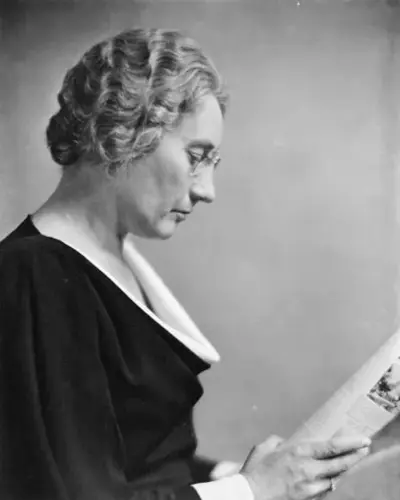
Agnes Campbell Macphail was a Canadian politician from Ontario who was the country's first female Member of Parliament. First elected to the House of Commons of Canada in 1921, she served as an MP until 1940. Moving to provincial politics, from 1943 to 1945 and again from 1948 to 1951, she served as a member of the Legislative Assembly of Ontario representing the Toronto riding of York East. Active throughout her life in progressive Canadian politics, Macphail worked for two separate parties. She also promoted her ideas through column-writing, activist organizing, and legislation.
