Gloria Steinem Quotes
Nothing changes the gender equation more significantly than women's economic freedom.
Steinem, Gloria. Outrageous Acts and Everyday Rebellions. Holt, Rinehart, and Winston, 1983.


Vladimir Lenin. This is a classic Lenninism where he argues that the basic principles of Communism solve all problems. He never explains how the abolition of private property would lead to female freedom and independence. Nor is this point argued by other Marxist advocates. It was an almost knee-jerk opportunistic reaction not unlike modern conservatives for whom lower taxes are the cure for all ills. The fact that married women were considered the private property of their husbands was amenable to much less drastic solutions than the elimination of private property. Indeed, we have simply abolished wives from the property class and left other property private.

Many of the most liberated and accomplished women in history have been from wealthy families. And yet with all their money they could only go so far. They needed an entire movement of women of all classes—and men to finally attain suffrage and the progress made thus far. Wealthy women were very active, alongside with working and middle class women in most of the demonstrations and campaigns for women’s rights.


Prior to WWII there were few women in the labor force, and the traditional “values” of American society relegated women to be homemakers. However with so many men under arms, there were not enough workers to achieve the war production that was necessary. So changes had to be made in public attitudes, not only towards women working, but the nature of the work that they are capable of and ought to be doing. So the government took a proactive role in changing public attitudes towards women in the workforce. It was a successful effort, and the sociological and psychological effects are still felt, half a century later. See {584781}.


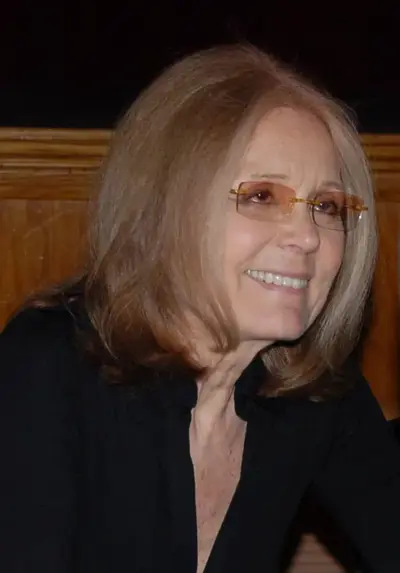
Gloria Marie Steinem is an American feminist journalist and social political activist who became nationally recognized as a leader and a spokeswoman for the American feminist movement in the late 1960s and early 1970s.
