Lucy Stone Quotes
We want rights. The flour merchant, the house-builder, and the postman charge us no less on account of our sex; but when we endeavor to earn money to pay all these, then, indeed, we find the interest.
Lucy Stone, 1818-1893, Founder, National American Woman Suffrage Association, Founder, Women's Journal, Remark made at a National Woman's Rights Convention in Cincinnati, Ohio, 1855
Sourced by: Eigen's Political and Historical Quotations


This quotation from the Koran is used by some to show that Islam was ahead of the West in terms of allowing women to earn their own money and inherit property. In this sense Islam was in the 7th Century far ahead of their Christian and Jewish Counterparts.
However, with this initial start, there is no version of Sharia (Islamic Law) that provides for men and women to earn equally for equal work. Further, there is no right to work at all. In Saudi Arabia, until 2005 women shopping for their own underwear had to buy from men as women were not allowed to be retail clerks. And the Taliban in Afghanistan required women to remain in their home and not work any other place. Even female doctors and nurses were not allowed to work in hospitals. Although they were allowed to control whatever meager income they might earn in their homes.


Although the situation improved over time, all employers do not pay equal wages, although the laws now require equal pay.


This is one of the earliest expressions of the now famous phrase.


Even today, her simple bluntness about such a sensitive subject is jarring. Imagine how it appeared in 1867 when this was a foreign idea which when broached by a woman, or even a man, was phrased delicately and discreetly. And yet, her phraseology was virtually impossible to argue against.


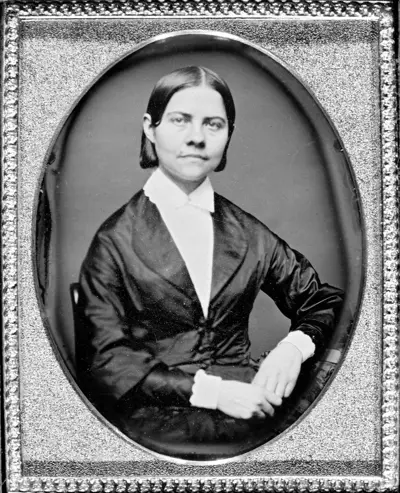
Lucy Stone was a prominent U.S. orator, abolitionist, and suffragist, and a vocal advocate and organizer promoting rights for women. In 1847, Stone became the first woman from Massachusetts to earn a college degree. She spoke out for women's rights and against slavery. Stone was known for using her birth name after marriage, the custom being for women to take their husband's surname.
