Henry Adams Quotes
The doctrine of states’ rights was itself a sound and true doctrine; as a starting point of American history and constitutional law there is no other which will bear a moment’s examination ... its prostitution to the base uses of the slave power was one of those unfortunate enlargements which often perturb and mislead history
Henry Adams, 1838-1918, Historian, John Randolph, 1882
Sourced by: Eigen's Political and Historical Quotations

When the first Southern States seceded, each appointed a whose job it was to persuade the other Southern States to also secede. In this case Hale was marketing secession to Kentucky which with Maryland were the only two Southern States to reject what they regarded as treason and rebellion. The importance of the quotation however is in his argument which was all based on enmity to racial equality and abolition. Later Southern apologists would argue that the Civil War was fought, not about slavery and racism butt about different philosophies of government. See {623715} .

At the time his Vice President, John C. Calhoun, was expounding a theory of “nullification” by which the states could supersede and nullify federal law in their states. When Jackson finished his toast, it was Calhoun’s turn (See {635896}.) His toast supported the States’ Rights position over the federal government. In those days Presidents and Vice President’s were often political enemies or of opposite parties. The President’s advisors thought that his toast might be misinterpreted. So when they gave the toast to the press as “The Federal Union: It must be preserved.” That was the form in which the press reported the President’s toast and for many years that was the version most quoted even though it was never delivered that way. However Jackson was responsible for both versions.

It is often said that “elections have consequences”. The 1960 election was one that certainly had profound consequences. Lincoln was unwilling to force the Northern states to return fugitive slaves against the constitution, laws and will of the people of those states as Buchanan said he was (but had a hard time doing). Also Lincoln was unwilling to allow new territories to enter the union if they allowed slavery. In the end, most pro Slavery politicians realized that with the greater growth rate of the North, they Southern disproportionate power in the Congress was doomed as would be the institution of slavery itself. Crittendon a strong Unionist from a border state, understood the implication of Lincoln’s election for the Union.

Note the language used for abolitionists in the years leading up to the Civil War. American voters at that time had always lived with the institution of slavery in America and many thought of it as an institutional pillar of the American nation. Those who wanted to bring down an American institution were “fanatics”. Generally this world is used to describe true fanatics and reformers who want to change anything that has been in existence a long while. To paraphrase Edwin Newman, What words shall we use to describe the zealot who wants to destroy the country when every person who wants to improve and change a facet of our system is called a “fanatic.”

Bragg and other Southerner leaders had an unusual concept of equality. Ever since the original Constitution, Northerner’s votes counted for themselves only while a single Southerner’s vote counted for all his slaves as well. So the individual Southerner always had more political power than his Northern counterpart. However, this notion of equality reached it’s acme when it came to the new territories. The Southern argument was that Southerners could not equally prosper in the new territories of Kansas and Nebraska if they could not bring their slaves to work the land. The thought that Southerners were equally able to personally work the new lands or pay labor seems to never have occurred to them. If Northerners could prosper that way then Southerners should be equally able to do so also. However, many Southern whites simply could not conceive of a “gentleman” working in the fields. Therefore they would not be equally able to prosper in the new territories.

The Mystery was for many years the only Black Newspaper in America.

Buchanan us considered by most historians to have been the worst or one of the worst Presidents of the United States. At this point, he was a lame duck president with Abraham Lincoln, the President Elect soon to take office. This speech, just encouraged the South more than ever and helped to bring about the Civil War. His vacillation and lack of any leadership on the slavery question exacerbated the polarization that was tearing the nation apart.

After the Civil War and Reconstruction, the American nation was still bitterly divided intelelctually, socially, emotionally and poliotically. In an effort to bring more unity to America, most of the power stucture and the influentials of the nation began to avoid those issues that would divide North and South and try and promote a narrative that both sides might be able to live with. And this is what Zeitz describes in this quotation. America went through a period of Revisionist History that even in the 21st century was held by many people. It wasn't until the middle of the 20th century that the real history and narrative of the Civil War and Reconstrution emerged from the few academics who had all along criticized the fabricated narritive that did unify the country at the cost of historical accuracy and truth. Many scholars point out that the price that America paid for this unity was the Jim Crow era and a century of legalized racism. Much of the nation was built on the labor of Negro slaves and the victims of the slavery era, also bore the brunt of American unity and reconcilliation.

Seward, the newly appointed Secretary of State was extremely concerned that if the radical direction that many of the Southern States were moving in turned into a Civil War, that the Union should not be seen as the precipitating initiator. His policy was followed and the secessionist extremists, not so politically sensitive, attacked Fort Sumter and became the initiator of the war so far as public opinion was concerned domestically and internationally. It was very important for the Union effort that the Confederates by seen as a group of radicals rebelling against the authority of a legitimate state. If that was the case, any effort to aid or help the South could be seen as an unfriendly act of war against the United States. Conversely, the South would have liked to be seen as an independent nation, no longer connected to the United States and entitled to diplomatic relations and foreign trade with all other nations. But the attack on Fort Sumter made that position much harder to maintain.


At the time, the prevailing federal policy was to return fugitive slaves to their owners. Lincoln was intent on keeping Kentucky and Maryland, both slave states, in the union, even at the cost of returning fugitive slaves. Shortly after, he came up with the policy of always returning fugitive slaves except in the rebellious states of the confederacy where the slaves were legally defined as ‘contraband’—war material, and thus could be seized by Union forces. Many fugitive slaves were thus employed by the Union for construction projects. Later, the Emancipation Proclamation set the slaves of the Confederacy free.

Some Lincoln critics point to this quotation to illustrate their belief that Lincoln’s emancipation of slaves was not based on deeply held personal moral convictions but was the result of pragmatic political forces pure and simple. Others believe that this statement to Greeley represented a political tactic to hold Maryland and Kentucky—then slave states—in the Union, but that Lincoln was waiting for the right time to adopt a policy of making emancipation paramount.


While this assessment was true up until the 1980s. By the 21st century there were almost no serious historians who thought that the motivation of the Confederate States for the Civil War was anything but slavery and the economic impact that abolition might bring. However, one of your advantages having this collection of historical quotations is that you can see for yourself why the Southern states say they were seceding. This following are four of the official secession resolution documents. Read these and you will see that all the claims that there were other major reasons for secession are just attempts to make the Confederacy a little less brutal and greedy. See {621371}, {619793}, {621372}, {621375}


Bickel was then clerk to Justice Frankfurter.


She was always an American optimist. Most of the Southern States did everything possible to try and defy the Supreme Court’s decisions on school segregation and other matters regarding their “traditional rights” to discriminate racially. Entire public school systems closed rather than desegregate. The Civil Rights Act and Voting Rights Act in 1964 made it much more difficult, But change took place inexorably over the next years as the older generation gave way to the new—one that was more educated and better informed as a result of television. Mississippi had more Black elected public officials than white. By the 21st century, there were relatively few areas where the Southern States still tried to evade the Supreme Court.
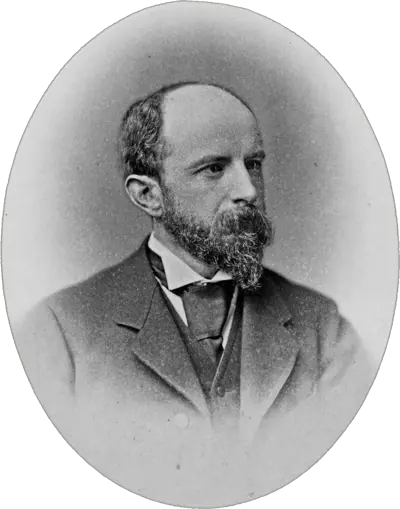
Henry Brooks Adams was an American historian and a member of the Adams political family, descended from two U.S. Presidents.
