John Stuart Mill Quotes
The doctrine called Philosophical Necessity is simply this: that, given the motives which are present to an individual's mind, and given likewise the character and disposition of the individual, the manner in which he will act might be unerringly inferred: that if we knew the person thoroughly, and knew all the inducements which are acting upon him, we could foretell his conduct with as much certainty as we can predict any physical event.
Mill, John Stuart. A System of Logic, Ratiocinative and Inductive, vol. 2. John W. Parker, 1843, p. 483.


There are many who disagree with this notion. They instead believe that circumstances and conditions will shape a great person’s actions. If character determined action and behavior, it would be very difficult to explain a great man who changes his mind on a major issue. Was the flip-flop the result of a radical character change? If not who would the same character produce two different outcomes with the same person?


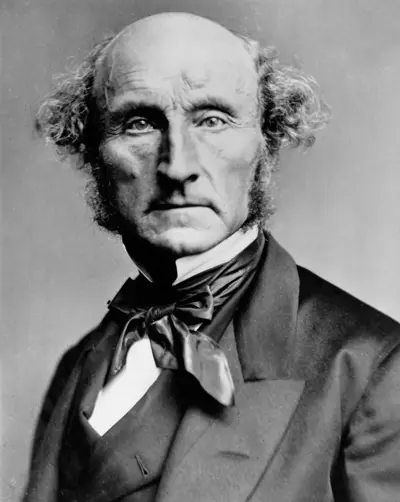
John Stuart Mill, usually cited as J. S. Mill, was an English philosopher, political economist, Member of Parliament, and civil servant. One of the most influential thinkers in the history of classical liberalism, he contributed widely to social theory, political theory, and political economy. Dubbed "the most influential English-speaking philosopher of the nineteenth century", he conceived of liberty as justifying the freedom of the individual in opposition to unlimited state and social control.
