Chrysippus Quotes
Although it is true that by fate all things are forced and linked by a necessary and dominant reason, nevertheless the character of our minds is subject to fate in a manner corresponding to their nature and quality.
Gellius, Aulus. Attic Nights, Volume II: Books 6-13. Translated by J. C. Rolfe, Harvard University Press, 1927, p. 101.


There are many who disagree with this notion. They instead believe that circumstances and conditions will shape a great person’s actions. If character determined action and behavior, it would be very difficult to explain a great man who changes his mind on a major issue. Was the flip-flop the result of a radical character change? If not who would the same character produce two different outcomes with the same person?

By morally subjugating the existing laws, the scriptures, public opinion to the law of nature, Spinoza distressed many of the clerics and civil authorities of the day. Spinoiza's views were so threatenting to the established religious authorities that he was the only man in history to have been excommunicated by the Jews, the Catholics and the Muslims.
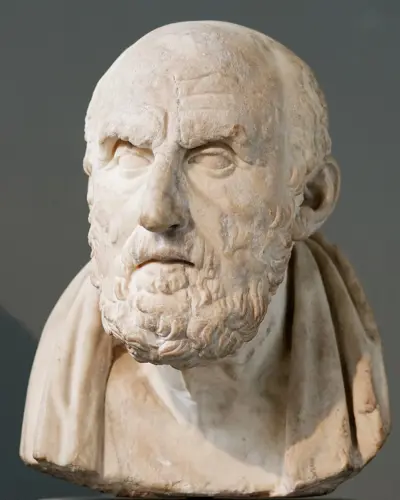
Chrysippus of Soli (/kraɪˈsɪpəs, krɪ-/; Greek: Χρύσιππος ὁ Σολεύς, Chrysippos ho Soleus; c. 279 – c. 206 BC) was a Greek Stoic philosopher. He was a native of Soli, Cilicia, but moved to Athens as a young man, where he became a pupil of Cleanthes in the Stoic school. When Cleanthes died, around 230 BC, Chrysippus became the third head of the school. A prolific writer, Chrysippus expanded the fundamental doctrines of Zeno of Citium, the founder of the school, which earned him the title of Second Founder of Stoicism.
