Maimonides Quotes
The fact that laws were given to man, both affirmative and negative, supports the principle, that God's knowledge of future events does not change their character. The great doubt that presents itself to our mind is the result of the insufficiency of our intellect.
Maimonides, Moses. The Guide for the Perplexed. Translated by M. Friedländer, 2nd ed., George Routledge & Sons, 1904, Part III, Ch. 20, p. 294.


Without free will, it would be futile for priests, ministers, rabbis or imams to preach morality to try and get people to behave in certain ways. The concept if sin and morality breaks down, and the clerics lost most of their power and influence. Cave was very concerned with the fact that a number of scientists were arguing that human behavior is caused by neurobiology, genetics and conditioning. They question whether an individual can be held accountable for his actions by the society that raised him, educated him, influenced him, and if the individual seemed aberrant relative to all that, it must be because of his particular neurology which enables him or prevents him from being influenced by the society, or allows him to be influenced by the "darker" aspects of society.


Elijah Ben Solomon -- Vilna Gaon. The Torah is the first 5 books of the Old Testament which the Jewish People regard as the basis of religion. For many, the interpretation is that of many Fundamentalist Christians and Jews that the Bible contains truth and all truth. However, there were those who have claimed that in addition to the words and their meaning, there is a code in the Bible that gives prophetic information, claiming that all major subsequent historical events were predicted in the Biblical code.


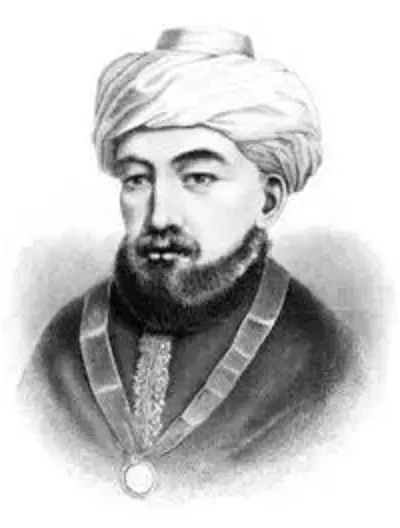
Moses ben Maimon (1138–1204), commonly known as Maimonides and also referred to by the acronym Rambam, was a medieval Sephardic Jewish philosopher who became one of the most prolific and influential Torah scholars of the Middle Ages. In his time, he was also a preeminent astronomer and physician, serving as the personal physician of Saladin. Born in Córdoba, Almoravid Empire (present-day Spain) on Passover eve, 1138 (or 1135), he worked as a rabbi, physician and philosopher in Morocco and Egypt. He died in Egypt on 12 December 1204, whence his body was taken to the lower Galilee and buried in Tiberias.
