Mary Wollstonecraft Quotes
The divine right of husbands, like the divine right of kings, may, it is hoped, in this enlightened age, be contested without danger.
Mary Wollstonecraft, “A Vindication of the Rights of Women” (1792)
Sourced by: Eigen's Political and Historical Quotations

This type of religious sexism is not unique to Islam. Fundamentalist Christians place women in a secondary role as do fundamentalist orthodox Jews although both allow a man to take only one wife. The Islamic scripture tells us that the Prophet allowed multiple wives only if the man had the resources to care for the wives and all the children. 4 is the maximum.


This is the passage of the Bible that causes many fundamentalist Christians to believe that wives should obey and be subservient to their husbands. Other Christians believe that this as archaic as stoning adulterers or executing children who are not obedient to their fathers. Ironically, this is one area where many fundamentalist Christians and fundamentalist Muslims are in agreement.


Marcus Porcius Cato. This quotation has had two different interpretations over time. One was that women if they received equality of treatment and voting would have an advantage for they also had their traditional “feminine wiles” and their sexuality, hence would dominate men. The second was a also a warning but based on the fact that women were superior in many ways, and given an equal chance, would excel men. The later interpretation is argued by some who point to the 2011 American data that shows more females than males graduating from high school and college, and females outnumber males in medical, law and several other professional schools. With the exception of a few Roman men, most heeded Cato’s warning and never took a chance on female equality.

Vladimir Lenin


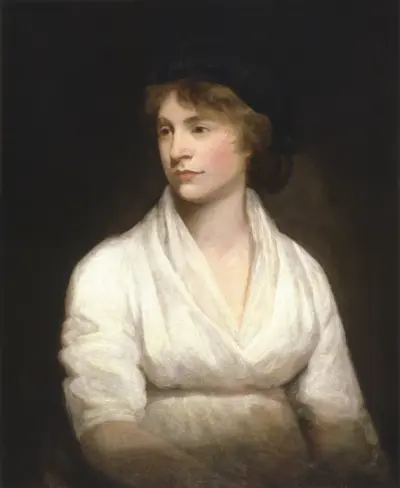
Mary Wollstonecraft was an English writer, philosopher, and advocate of women's rights. Until the late 20th century, Wollstonecraft's life, which encompassed several unconventional personal relationships at the time, received more attention than her writing. Today Wollstonecraft is regarded as one of the founding feminist philosophers, and feminists often cite both her life and her works as important influences.
