David Irving Quotes
...the discovery, that at no time did this man (Hitler) pose or intend a real threat to Britain or the Empire.
Irving, David. Hitler's War. Hodder and Stoughton, 1977, p. xvii.


“Lord Haw Haw” was the name that he used in his propaganda broadcasts from Germany to England. Despite the fact that the broadcasts were anti-British and pro German, many in Britain listened to him regularly. He was very witty and many of his criticisms of British society were views held by many patriots in Britain. As pure entertainment, he was better than most of the BBC broadcasts during WWII. At the end of the war, Joyce was captured, tried and executed for treason.


Coughlin was a great admirer of Adolf Hitler and Benito Mussolini and the Fascists. He was one of the American “heroes” in Nazi Germany, receiving assistance from the Nazi government. Between his anti-Semitism and support for Hitler, Fascism and radical socialism, the Vatican ordered him off the air and shut down his political demagoguery.

Lindbergh, a great aviator, was a Fascist who like most of the America Firsters was a great admirer and supporter of Hitler and Mussolini. The British and the Jews were by no means unified in favor of war but the majority of each group was. The British had theor Fasscists including the Duke of Windsor who was pressured to abdicate. There were even some Jews who thought that Hitler was an aberation and the German people would never follow him. But the American right wing extremists were adamant that the United States should not enter the war. Even after the Japanese sneak attack on Pearl Harbor and the German Declaration of War against the United States many of the

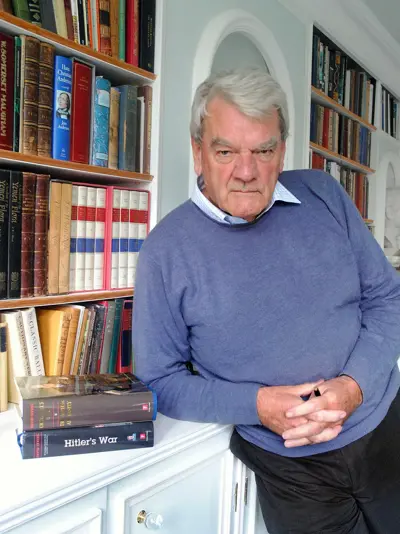
David John Cawdell Irving is an English author and Holocaust denier who has written on the military and political history of World War II, with a focus on Nazi Germany. His works include The Destruction of Dresden (1963), Hitler's War (1977), Churchill's War (1987) and Goebbels: Mastermind of the Third Reich (1996). In his works, he argued that Adolf Hitler did not know of the extermination of Jews, or, if he did, he opposed it. Though Irving's negationist claims and views of German war crimes in World War II (and Hitler's responsibility for them) were never taken seriously by mainstream historians, he was once recognised for his knowledge of Nazi Germany and his ability to unearth new historical documents.
