Gene Tierney Quotes
In the months leading up to World War II, there was a tendency among many Americans to talk absently about the trouble in Europe. Nothing that happened an ocean away seemed very threatening.
Tierney, Gene, and Mickey Herskowitz. Self-Portrait. Wyden Books, 1979.


Leval was an appeaser and a collaborator with the Nazi’s. He led the government in name but the Germans really controlled the country. His actions killed tens of thousands of French men and women by turning them over to the Germans. After the Germans were defeated in WWII, Leval was shot as a traitor by the Free French forces. See {587231}, {587228} and {587230}.


His appeal was also in the name of concurring heads of state of Finland, Holland, Denmark, Norway, Luxemburg, and Sweden.

Unusually for a scientist, Szilard was politically very astute. In this letter he predicted exactly what was going to happen in Europe which would be WWII. He was the leading scientist organizing the lobbying efforts with the Franklin D. Roosevelt administration to develop an atomic bomb.


Ironically it was not the military situation that inhibited FDR. He did not fear the military of Germany, but he had a very isolationist Congress to contend with and a right wing America First movement of Nazi German sympathizers including hero Charles Lindbergh and Roosevelt’s own Ambassador to Great Britain, Joseph P. Kennedy. It was finally Germany who declared war on the United States after the attack on Pearl Harbor.

Unfortunately, the prime minister turned out to be very accurate in his predictions. The Second World War functioned just as he said.

Theodore Roosevelt was the Presidential nominee. Johnson was a leader of some members of Congress some of whom were extreme isolationists and some of whom were Nazi sympathizers and Hitler admirers. When the Japanese attacked Pearl Harbor later that year, Germany, fulfilling its treaty with Japan, declared war on America, Johnson’s group no longer mattered. Before WWII most Republicans were opposed to Defense Spending and accused the Democrats of being war hawks. After WWII, they flip flopped and became more hawkish than the Democrats who they accused of being soft on defense for years thereafter. See {631380} for President Roosevelt’s different view.

In this case, the Speaker of the House attacked the President of his own party for being willing to conduct disarmament discussions with the Russians. He implied that the outcome could be the appeasement of the Russians just as British Prime Minister Neville Chamberlain appeased Hitler in 1938 in Munich, giving the German Fuhrer the “green light” to take over Europe. The Conservative Caucus went even further and explicitly called it “appeasement”. Reagan however always talked about military strength and power, and provided plenty of money for the military and weapons a few of which were boondoggles but he was a very cautious American president in authorizing military force. And he not only was willing to discuss arms control and reductions and enter into treaties for disarmament, much to the distress of the hawks of his own party. Few American Presidents have so well balanced the use of diplomacy with the threat of military force as well as Reagan.


In 1938 Germany had rearmed and resumed its aggressive designs of expansion. Hitler wanted the Sudetenland part of Czechoslovakia and threatened an invasion of that country. England had France had a treaty obligation to militarily support Czechoslovakia if it were attacked. British Prime minister Neville Chamberlain and the French were desperately trying to avoid war, not realizing that with Hitler, that position was the very thing that would bring on war. So they agreed to Hitler’s demand and allowed Czechoslovakia to be partitioned and the Sudetenland was annexed to Germany. This craven appeasement emboldened Hitler who then decided to conquer all of Europe as he had no serious opposition from France and England—the two powers that might have stopped him. (At the time, the French had a larger army than the Germans.)

The Times regretted that the Germans did not speak to the Austrians more vigorously when they were threatening to attack Serbia who harbored anti-Austro-Hungarian terrorists (see {642085}). What the Times editors did not realize was that the Germans had already made their war plans (see {642092}) and the Serbian issue was just the justification they needed to implement them. So there was no real reason for the Germans to discourage the Austro-Hungarian Empire from its mission to punish Serbia.


The reference to Munich was to the famous appeasement of Adolf Hitler and the Nazis by British Prime Minister Neville Chamberlain. See {585941}.

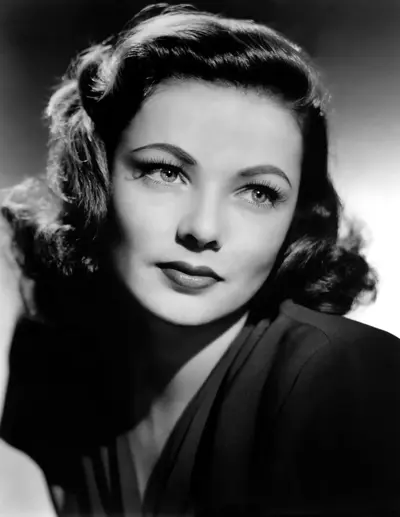
Gene Eliza Tierney was an American film and stage actress. Acclaimed for her great beauty, she became established as a leading lady. Tierney was best known for her portrayal of the title character in the film Laura (1944), and was nominated for an Academy Award for Best Actress for her performance as Ellen Berent Harland in Leave Her to Heaven (1945).
