William E. Borah Quotes
Lord, if only I could have talked with Hitler, all this might have been avoided.
William E. Borah, 1865-1940, U. S. Senator (Republican, ID), On hearing of Germany's invasion of Poland, September 1, 1939
Sourced by: Eigen's Political and Historical Quotations

The “fool” was Neville Chamberlain, 1869-1940, the British Prime Minister who refused to stand up to Hitler and instead negotiated a peace pact, returned home declaring that he had preserved peace. (See {585941}.) Then Hitler invaded more of Europe and WWII was begun. Ford was a Hitler admirer and pro-German (Hitler supported him for the American Presidency--{586988}—and awarded him a medal) but he thought that England had bungled the negotiations by sending someone who was very weak. In this sense his views were the same as most who were anti-Hitler.


Although Churchill, FDR, and a few other world leaders also recognized this reality, most people, even in America and Europe were not yet knowledgeable about the danger of Hitler and Nazi Germany. What is fascinating is that a theoretical scientists—one whose work had little to do with reality could be that perspicacious to identify major political trends. But Einstein was not only one of the world’s great scientific thinkers but he was a very sophisticated political and philosophical thinker.

This quotation is important because there are some who believed that the professional German Soldiers did not respect Hitler and his murderous policies. This quotation shows that at least publicly Donitz had no problem extolling Hitler above all others. After the war Donitz was found guilty of Unrestricted Submarine Warfare and using thousands of slave laborers in his shipyards. He was sentenced to 10 years, one of the lightest sentences if the German War Crimes Trials.

She, like her husband and many of the America Firsters, believed that Hitler should be allowed to overrun Europe and Russia. See {613688}. The America First group was a pro-fascist organization who supported the axis powers until they declared war on the United States. Even then, there were some Nazi sympathizers who were anti-immigrant, racist and anti-Semitic in addition to being fascists. Both of the Lindberghs were America Firsters


This new form of patriotism, this encouragement of pregnancy—even outside of marriage—was just too controversial. Himmler withdrew the order. It illustrates that even in a brutal dictatorship, public opinion can influence government.


The Prime Minister, Neville Chamberlain, preceded him with the announcement of declaration of war against Germany, but it was left up to the Foreign Minister to explain the implications. This was the first time in history that a nation had used radio to communicate such momentous events to its population.

In this case, the Speaker of the House attacked the President of his own party for being willing to conduct disarmament discussions with the Russians. He implied that the outcome could be the appeasement of the Russians just as British Prime Minister Neville Chamberlain appeased Hitler in 1938 in Munich, giving the German Fuhrer the “green light” to take over Europe. The Conservative Caucus went even further and explicitly called it “appeasement”. Reagan however always talked about military strength and power, and provided plenty of money for the military and weapons a few of which were boondoggles but he was a very cautious American president in authorizing military force. And he not only was willing to discuss arms control and reductions and enter into treaties for disarmament, much to the distress of the hawks of his own party. Few American Presidents have so well balanced the use of diplomacy with the threat of military force as well as Reagan.


Wolfe uses the term in the classic sense of appeasing Hitler or Stalin—appeasement of a powerful totalitarian force. However some politicians—usually at the extreme wings of the political spectrum—see any concession to political opponents as “appeasement”. Some, like the Tea Party Republicans of that era, regard any compromise as “appeasement”.


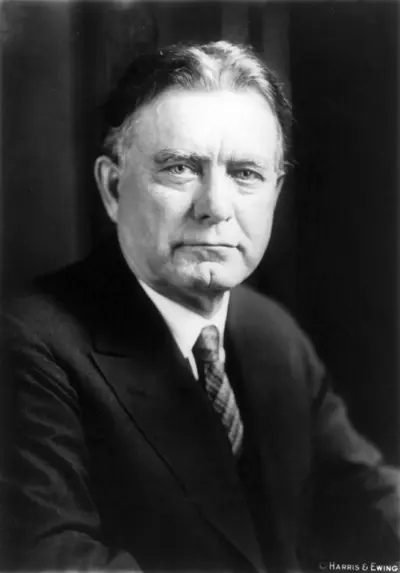
William Edgar Borah was an outspoken Republican United States Senator, one of the best-known figures in Idaho's history. A progressive who served from 1907 until his death in 1940, Borah is often considered an isolationist, because he led the Irreconcilables, senators who would not accept the Treaty of Versailles, Senate ratification of which would have made the U.S. part of the League of Nations.
