Vladislav Inozemtsev Quotes
The democratic political institutions of Western countries arose and matured as industrial capitalism matured. It was a time of historically unprecedented economic growth and the concomitant development of new social groupings and relationships. They arose in elite political cultures that were in the main ethnically homogeneous, even if, notably in the American case, the society at large was considerably less so.
Vladislav Inozemtsev, Russian Economist, The Cultural Contradictions of Democracy, http://www.the-american-interest.com/article.cfm?piece=1188
Sourced by: Eigen's Political and Historical Quotations


This editorial from an Alabama newspaper in 1856 is a wonderful illustration of the animosity held by many in the South towards the North. It also shows the major difference in egalitarianism between the North and the South at that time. The only Southerners who could read were the upper class who were terribly fearful of the effects of upward mobility of whites in a slave free industrial democracy. “Mechanics” at the time referred to all skilled craftsmen.


Stalin was then only 26 years old. This was more than a decade BEFORE the Russian Revolution and Stalin was a young left wing revolutionary planning how to bring about a revolution and how the society should operate thereafter. He was then much the youthful, intellectual, Georgian idealist.

Rich people the world over have often sought a safe way to save their money. Unfortunately, in most counties of the world, there is not the rule of law and the limited government that is in the United States and a few other industrial democracies. So the rich of those countries will often avoid investing their money in their own country and instead invest it in the United States or another “safe” country. This lack of patriotism makes development of poorer countries that much more difficult. However, the rulers of those countries rarely do the things necessary to create a reasonably safe environment for investment. Even in America, some wealthy people will invest in other nations or “bet against the dollar” in favor of the Yen, the Swiss Franc or the Euro. During the American Revolution and the War of 1812, there was every reason for wealthy Americans to send their money to England for investment or banking there, However, most American wealthy families were patriotic enough not to maximize their personal income.


This was an incredible prediction that few people thought was possible. This speech was given in the early days of WWII when it was far from clear that we would win.
Zhou , Deng and other Chinese senior leaders carefully studied failures of 200th Century Communist nation economies from Russia to North Korea, and observed the successes of not only the United States and Western Europe, but South= Korea and Thailand å well and decided to transform to a capitalist style market and competitive economy. Zhou organized a cruse on which they invited Western economists and political economists to advise on how to make the transformation. Th Chinese took many of the Western ideas, placed them into a Chinese context, added some ideas of their own and proceeded ahead with the largest and most seectaculkar economic transformation and development in World history.


Burke was one of the few in England who predicted economic and commercial success of America.


The word “proprietor” at the time meant someone who had title to land. The title was then almost always tied up with the aristocratic titles. “Great proprietors” were therefore nobles who owned and controlled large land holdings. The “improvers” tended to be the businessmen—especially the manufacturers and the transportation magnates. Large landowners could just make money by renting parts of their land to tenant farmers. They needed no capital, no vision, not much skill or talent, and they didn’t have to take any risks.


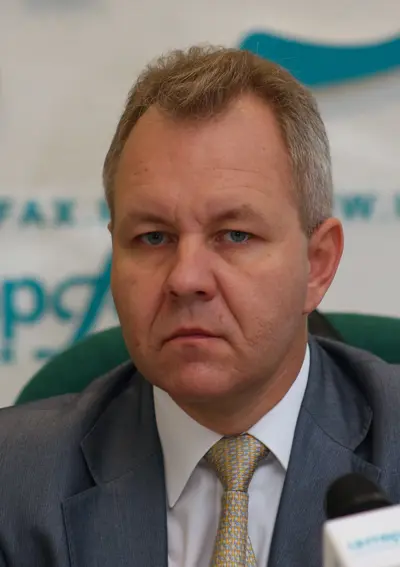
Vladislav Inozemtsev is a Russian academician who is the director of the Moscow-based Centre for Research on Post-Industrial Societies, a nonprofit think-tank. He is a professor and the chair at the Department of World Economy, Faculty of Public Governance, Moscow State Lomonosov University.
