Theodore Roosevelt Quotes
The death-knell of the republic had rung as soon as the active power became lodged in the hands of those who sought, not to do justice to all citizens, rich and poor alike, but to stand for one special class and for its interests as opposed to the interests of others.
Theodore Roosevelt, 1858-1919, 26th President of the United States (Republican, NY), Speech, Syracuse, NY, September 7, 1903
Sourced by: Eigen's Political and Historical Quotations


Tolstoy saw this as a much more general phenomenon than classic cases where the English dominated India. He not only included ethnic minorities (like the Chinese who dominate the economy of the Philippines or the Shiite-Sunni dominance battles in the Middle East, but he included a classic business situation where the minority (the wealthy owners and bosses) dominate and control the majority (the workers).

The term “rugged individualism” was used at the time be very conservatives and the very wealthy to describe business leladers with words that had very good public connotations. They argued that it would be undesirable to curtail their individualism that was so important by any government regulations or laws that would limit what the business leaders could do. However, the reality was that these very successful and powerful “rugged individualists” had regimented most everyone else—employees, consumers, and small businessmen who might sell them services or products. To Tugwell, if the wealthy and powerful few had no restrictions on their individualism, there would be precious little individualism for most of society. He sought a balance of regulating the individualism and prerogatives of the few somewhat in order to allow the vast majority of people to be able to have individuality as well.


Ingersoll was considered to be the greatest orator and political thinker of his day, but his overt atheistic views curtailed his elected political career.


The United States money was then on the Gold Standard. The country was growing and needed more money in circulation. But most of the gold that might be available was in England and English bankers could control much of the U. S. economy. The Populists and the Democrats wanted us to use silver to back U. S. money as there was plenty of silver in the United States. The Republicans would not relent and depression was upon the country. A half century later, it would be Republican President Richard M. Nixon, who took the United States off the gold standard. Lease was far ahead of her time.


He was writing about America and many of the industrial democracies who at the time, as a result of globalziation, technology, government action and inaction, and other factors, had gone through a 30 year period of increasing disparities.


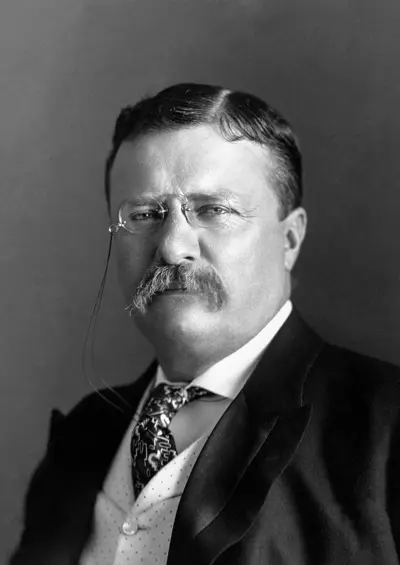
Theodore Roosevelt Jr., often referred to as Teddy or his initials T. R., was an American statesman, conservationist, naturalist, historian, and writer, who served as the 26th president of the United States from 1901 to 1909. He previously served as 33rd governor of New York from 1899 to 1900 and the 25th vice president of the United States from March to September 1901. Roosevelt emerged as a leader of the Republican Party and became a driving force for anti-trust and Progressive policies.
