Edward Abbey Quotes
The death penalty would be even more effective, as a deterrent, if we executed a few innocent people more often.
Abbey, Edward. A Voice Crying in the Wilderness (Vox Clamantis in Deserto). St. Martin's Press, 1989.


The Senator was referring to the large number of people who had been exonerated by DNA evidence while on Death Row.

Texas executes more people than the rest of the United States does. However, just before the debate an investigation disclosed 56 recent cases in Texas where the “criminals” were completely exonerated based on the work of some volunteer attorneys and law students. They were all released from jail where many had served decades for crimes they did not commit. 5 were released from Death Row—awaiting to be executed. See {635339}.

Wade was urging the Prince to abolish the Death by 1000 Cuts {641825} and simply rely on beheading the form of execution for “lesser” crimes. Note that the Prince’s fears and arguments parallel the same given by modern proponents of the Death Penalty—without it criminals would not be controlled and instability would ensue.

There was, and still is in some parts of the world, this belief taht one of the main reasons for capital punioshment with visible and public executions was to deter others from comitting crimes by seeing the example of what happens to the transgressors. For these people, exemplified by this quotation of Dr. Johnson's, public executions are crime prevention. This notion tirned out to have been a fallacy. In England they found that during every public hanging, skilled pickpockets would steal from the onlookers who were tranfixed on the macabre secene--this despite the fact that pickpocketing was a hanging offence.


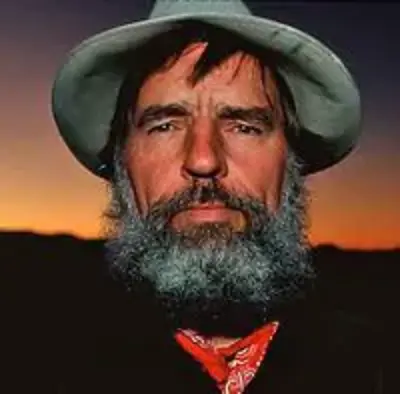
Edward Paul Abbey was an American author and essayist noted for his advocacy of environmental issues and criticism of public land policies. His best-known works include Desert Solitaire, a non-fiction autobiographical account of his time as a park ranger at Arches National Park considered to be an iconic work of nature writing and a staple of early environmentalist writing; the novel The Monkey Wrench Gang, which has been cited as an inspiration by environmentalists and groups defending nature by various means, also called eco-warriors; his novel Hayduke Lives; and his essay collections Down the River (with Henry Thoreau & Other Friends) (1982) and One Life at a Time, Please (1988).
