John C. Calhoun Quotes
The day that the balance between the two sections of the country - the slaveholding States and the non-slaveholding States - is destroyed is a day that will not be far removed from political revolution, anarchy, civil war, and widespread disaster.
Calhoun, John C. "Speech on the Slavery Question." The Works of John C. Calhoun, edited by Richard K. Crallé, vol. 4, D. Appleton and Company, 1854, p. 544.


In many respects, it is amazing that secession did not take place earlier.


At this point, there had hardly been any fighting and no outrages or war crimes were yet committed by either side. These would come later—more on the Confederate side as they did not want to take the limited resources they had from their troops to fulfil abstract obligations to prisoners of war or to civilians. A few deliberately chose to use terror tactics. The Union troops also at various points in the war got out of hand and looted personal property of civilians. But at this point, this proclamation was just lies and propaganda.

Buchanan us considered by most historians to have been the worst or one of the worst Presidents of the United States. At this point, he was a lame duck president with Abraham Lincoln, the President Elect soon to take office. This speech, just encouraged the South more than ever and helped to bring about the Civil War. His vacillation and lack of any leadership on the slavery question exacerbated the polarization that was tearing the nation apart.


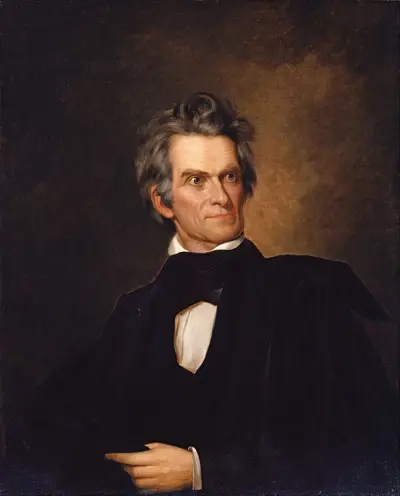
John Caldwell Calhoun was an American politician and political theorist from South Carolina who held many important positions including being the seventh vice president of the United States from 1825 to 1832, while adamantly defending slavery and protecting the interests of the white South when its residents were outnumbered by Northerners. He began his political career as a nationalist, modernizer, and proponent of a strong national government and protective tariffs. In the late 1820s, his views changed radically, and he became a leading proponent of states' rights, limited government, nullification, and opposition to high tariffs. He saw Northern acceptance of those policies as a condition of the South remaining in the Union. His beliefs and warnings heavily influenced the South's secession from the Union in 1860–1861.
