William J. Brennan Jr. Quotes
The concept of military necessity is seductively broad, and has a dangerous plasticity. Because they invariably have the visage of overriding importance, there is always a temptation to invoke security "necessities" to justify an encroachment upon civil liberties. For that reason, the military-security argument must be approached with a healthy skepticism.
William J. Brennan, Jr., 1906-1997, U. S. Supreme Court Justice, Brown v. Glines, 444 US 348, 1980
Sourced by: Eigen's Political and Historical Quotations


The issue of whether the military has any rights per se in a democracy or is an institution established and controlled by the people is one that separates many countries today. In one philosophy—held by America and most industrial democracies—the military is completely subservient to and under the control of the people and their government. The other view held by many societies controlled by the military is that the military is a subset of the people with specific rights granted to it. In some countries the military can name representatives, can veto legislation and are considered a faction just like political parties. See China, Turkey, Argentina, and Indonesia for examples of the latter view.


Many of the young men who were given this form to fill out, had never been in Japan and some did not even know there was an emperor there. Nonetheless the Japanese American divisions of enlistees were the most effective and most decorated fighting units for America while their parents who had not been born in America were still imprisoned in the internment camps. See {624010}.


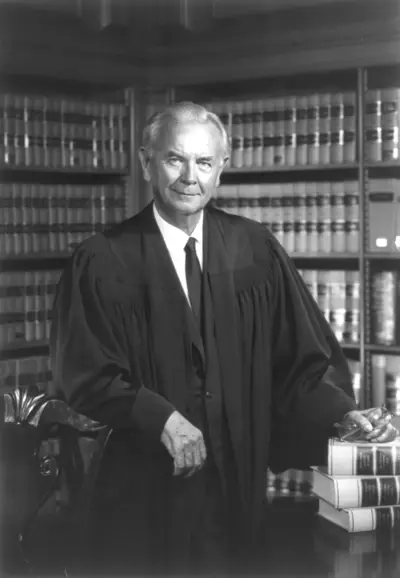
William Joseph Brennan Jr. was an American lawyer and jurist who served as an Associate Justice of the United States Supreme Court from 1956 to 1990. He was the seventh-longest-serving justice in Supreme Court history, and known for being a leader of the Court's liberal wing.
