Theodore Roosevelt Quotes
A good Navy is not a provocation to war. It is the surest guaranty of peace.
Roosevelt, Theodore. "Second Annual Message to Congress." Washington, D.C., 2 Dec. 1902. Address.


At that time there were extensive meetings and discussions for the creation of what was to be the United Nations. The negative view of the United Nations or other international security organization is now and always has been held by a vocal minority in the United States.

What is interesting about this quote is that it is very much like many American politicians who support a large and strong military.


The notion of America flexing its military muscles and intimidating other nations by sending a fleet of 16 battle ships around the world was not greeted enthusiastically by some. However in Japan, the reaction was totally positive. The Russo-Japanese War had been ended thanks to the mediation of Theodore Roosevelt (for which he was awarded the Nobel Peace Prize) and America was a model for much of Japan’s modernization. 25 years later the Japanese would view America as an interfering, intimidating bully, curtailing their national aspirations and rights.


During the presidential debates George W. Bush stated that he would be very hesitant to use the military for nation building around the world. Less than a year later, the Bush administration, faced with the September 11, 2001 terrorist attacks, launched a massive attack on the Taliban regime in Afghanistan. After fighting and winning the war, the military soon realized that they would in fact be involved in nation building. However, with the assistance of the United Nations much of the humanitarian burden was lifted from the U.S. military.
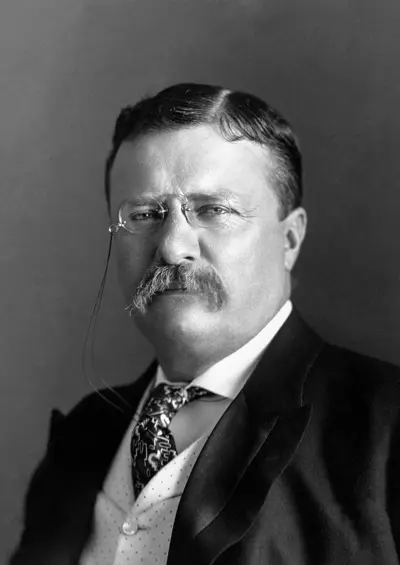
Theodore Roosevelt Jr., often referred to as Teddy or his initials T. R., was an American statesman, conservationist, naturalist, historian, and writer, who served as the 26th president of the United States from 1901 to 1909. He previously served as 33rd governor of New York from 1899 to 1900 and the 25th vice president of the United States from March to September 1901. Roosevelt emerged as a leader of the Republican Party and became a driving force for anti-trust and Progressive policies.
