J. Edgar Hoover Quotes
The Communist threat from without must not blind us to the Communist threat from within. The latter is reaching into the very heart of America through its espionage agents and a cunning, defiant, and lawless communist party, which is fanatically dedicated to the Marxist cause of world enslavement and destruction of the foundations of our republic.
Hoover, J. Edgar. Testimony before the House Committee on Un-American Activities. Hearings Before the Committee on Un-American Activities, House of Representatives, U.S. Government Printing Office, 1947, p. 37.


In 1927 Astor with other wealthy Americans (including Kermit Roosevelt, Marshall Field III, David Bruce and Winthrop Aldrich) founded their own private espionage agency, ROOM, which was utilized heavily by FDR:


Dulles was writing about the World War II Abwehr, the German intelligence service.

McCarthy was one of the most interesting political phenomena of politics in the 1950s. He was an alcoholic megalomaniac who made wild accusations about communists everywhere and that the Secretary of State and other politicians were communists. He claimed to have a list of thousands of communists in high positions of government. His accusations were so dramatic that most people assumed that there were facts behind them otherwise no rational man would say such things. But it turned out that not a single accusation was ever proven. When McCarthy was esposed, he was censured by the Senate and he lost most of his political credibility and shortly thereafter died as a result of his severe alcoholism.


This was the directive that gave the CIA authority for its many covert operations.


Vladimir Lenin. What is surprising to many extreme anti-communists who think labor unions per se are communistic, is the fact that the Communist Party had very great difficulties penetrating labor unions and persuading them to become subservient to the Party. This is another example of a difference between Russian Communism and other forms of socialism.


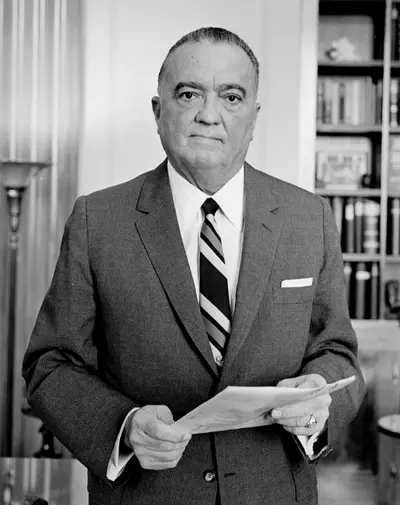
John Edgar Hoover was an American law enforcement administrator who served as the first Director of the Federal Bureau of Investigation (FBI) of the United States. He was appointed director of the Bureau of Investigation – the FBI's predecessor – in 1924 and was instrumental in founding the FBI in 1935, where he remained director for another 37 years until his death in 1972 at the age of 77. Hoover has been credited with building the FBI into a larger crime-fighting agency than it was at its inception and with instituting a number of modernizations to police technology, such as a centralized fingerprint file and forensic laboratories. Hoover is also credited with establishing and expanding a national blacklist, referred to as the FBI Index or Index List, renamed in 2001 as the Terrorist Screening Database which the FBI still compiles and manages.
