Vladimir Lenin Quotes
It is necessary … to agree to any and every sacrifice, and even—if need be—to resort to all sorts of stratagems, maneuvers and illegal methods, to evasion and subterfuges in order to penetrate the trade unions, to remain in them, and to carry on Communist work in them at all costs.
Vladimir Lenin. What is surprising to many extreme anti-communists who think labor unions per se are communistic, is the fact that the Communist Party had very great difficulties penetrating labor unions and persuading them to become subservient to the Party. This is another example of a difference between Russian Communism and other forms of socialism.
Nikolai Lenin, 1870-1924, Russian Communist Premier 'Left-Wing' Communism, An Infantile Disorder
Sourced by: Eigen's Political and Historical Quotations

According to Palmer, all labor strikes were a part of the international communist movement to take over America. This quotation is an excellent example of the conflation and the strange logic of the extreme anti-communists of the red scare. It started with a railroad strike. Because some of the strike leaders were socialists and some communists, the strike was communist. And if it was communist, the strike is but one step in capturing the political and economic power of the nation, and the purpose of that was to overthrow the government and substitute the governmental structure of Russia. With such thinking no labor action could be seen as American and patriotic if there were any socialists or communists participating in the strike. Later in the McCarthy era, a strike would be a menace if any participant even had been a communist or was related to one or had friends who were communists or even if not but the Communists morally supported the strikers, then the strike was dangerous. The same thing for civil rights. The Communists loudly opposed racial segregation. Therefore any effort to end segregation was a danger to America and furthers the communist conspiracy. This “logic” can be seen well into the 1960’s by the Southern segregationist leaders.


First Lady Eleanor Roosevelt had more influence and visibility than any other first lady, before or since. She was First Lady for 3+ terms—longer than any other, and in addition to her official duties, she wrote a very popular daily newspaper column. As FDR was handicapped and could not travel much, she traveled all over the nation and the world. She was also very outspoken and no one ever knew whether or not she was speaking with the President’s concurrence or was on her own. She tended to be very liberal—especially in terms of the evils of racial segregation—then legal, and the problems of workers. Her broad influence was very damaging to Southern Segregationist groups and arch Conservative economic groups, who realized that her influence in the change of public opinion was much more effective at changing America than were the socialists and communists who were calling for revolution and were so unappealing that they could easily be attacked. Mrs. Roosevelt was for them more dangerous than Communism.


This has been the case ever since WWII. In the Great March where the Communists avoided capture by the Nationalists, the army, the party, and many of the people were in a single amalgam living on the move. The positive and fair behavior of the Communist army during the Great March did a great deal to convince the Chinese peasants that the Communists were not corrupt and greedy as were most of the Nationalist officials they ran into. From a strict military point of view, there was little for the Army to do for defense and national security since the overthrow of the Nationalists. So they have been great supporters of development of the nation after the revolution, but by the 21st century had developed some of their own corruption and built companies to produce funds for the army (and some of its leaders personally.
Many Americans believed that the Communist government of Russia was softening its world revolution doctrine as the Communist government was concentrating on coping with the huge problems they faced. He argued that there was no ideological mellowing. Immediately after the Russian Revolution, the provisional government appointed him as Ambassador to the United States. However, the provisional government was supplanted when the Bolsheviks took over. Not enamored of Communism, he stayed in the United States with many other Russian refugees.


See the Related Quotation for a good contemporary example of the clerics whop were party tools.


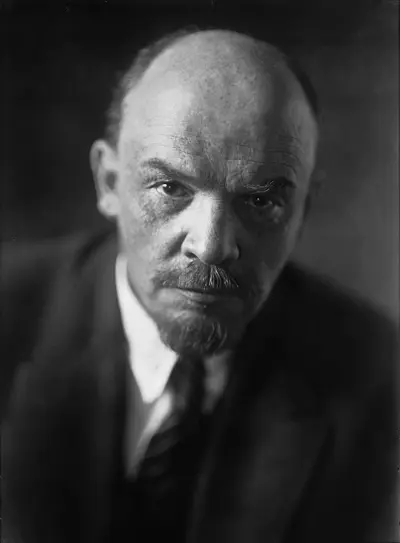
Vladimir Ilyich Ulyanov, better known by his alias Lenin, was a Russian revolutionary, politician, and political theorist. He served as the first and founding head of government of Soviet Russia from 1917 to 1924 and of the Soviet Union from 1922 to 1924. Under his administration, Russia, and later the Soviet Union, became a one-party socialist state governed by the Soviet Communist Party. A Marxist, he developed a variant of this communist ideology known as Leninism.
