Samuel P. Huntington Quotes
The British were white, English, and Protestant, just as we were. They had to have some other basis on which to justify independence, and happily they were able to formulate the inalienable truths set forth in the Declaration.
Huntington, Samuel P. "Interview by Amina R. Chaudary." Islamica Magazine, no. 19, 2007.

The professor was lecturing to British university students about 75 years after the American Revolution. The “American War” is the term the British use for the American Revolution.


Monroe visited his daughter who was attending school in Paris. She observed that the French roads were much finer than those in America:


In most revolutionary settings leaders have to persuade people who have voted with no success to turn to the rifle. In Ireland at this point, almost all the nationalsits knew that the rifle would help them but they were not sure that a vote would have the effect of a bullet.


South America, invaded and colonized by Spain was a brutal combination of slavery and repression. Even the European colonists suffered under the terrible combination of exploitation, militarism and religious dictatorship. Independence from Spain was equally bloody as unlike in North America where the fight was against British rule, in South America the black slaves, the indigenous Indians and the white colonists all had scores to settle with the Spanish rulers. And the Spanish in turn realized that and brutally repressed all rebellion attempts. Atrocities were common, and committed by almost all, including even idealists like Bolivar.


Webster, a Senator from South Carolina, was a supporter of the Fugitive Slave Law.


For his seditious activities he was sentenced to penal servitude for life. He escaped and came to America where he entered politics


Jefferson had deliberately modified John Locke’s phrase “life, liberty and property.


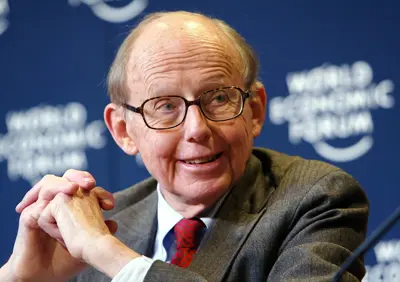
Samuel Phillips Huntington was an American political scientist, adviser and academic. He spent more than half a century at Harvard University, where he was director of Harvard's Center for International Affairs and the Albert J. Weatherhead III University Professor.
