Napoleon Bonaparte Quotes
The Bible is no mere book, but a Living Creature, with a power that conquers all that oppose it.


This quotation illustrates that in the late 19th Century, there were still very prominent American scientists who were Biblical Literalists as well—a virtual intellectual impossibility. Dana was a Yale professor, and yet he rejected Evolution and had the age of the rocks he studied all wrong. At the time, America had only 1 great world class scientist (Physicist Albert A. Michelson) and American Science really became great in the 20th century. Dana was not a total incompetent however. He had amassed vast descriptive knowledge of California and other areas and was at the time considered America’s preeminent Geologist despite his lack of understanding of many fundamental aspects of his own science which was understood by many English and European scientists.


Watchtower Bible and Tract Society of New York

The Creation Museum makes the Christian Fundamentalist Case for their alternative view of the creation of the earth and man. In the process, they make claims that are proven incorrect every day in science, like the earth is only about 6000 years old {641849} , and all the species on earth were then separately created in their immutable form with no evolutionary process. There are many deeply religious Christians who do not take the Bible literally and have no problem with evolution as the mechanism which God selected to create and develop life. The Roman Catholic Church, for example, does not maintain that the Bible is literally true and Evolution did not account for the development of life on earth. The major difference between most modern scientists, philosophers, and theologians, is that some believe that God of other Supreme Being had nothing to do with the evolution and development of life forms and those who believe that Evolution was the mechanism that God created and used. See {641848} for an example of the former.


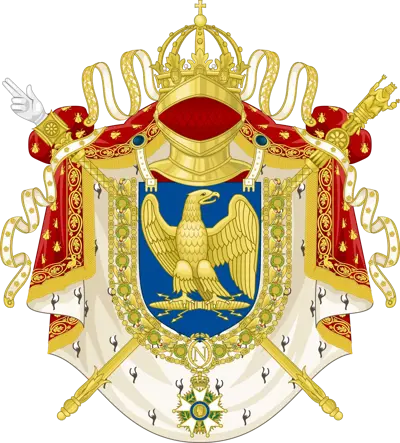
Napoléon Bonaparte was a French military and political leader of Corsican descent. He rose to prominence during the French Revolution and led several successful campaigns during the Revolutionary Wars. As Napoleon I, he was Emperor of the French from 1804 until 1814, and again in 1815. Napoleon dominated European and global affairs for more than a decade while leading France against a series of coalitions in the Napoleonic Wars. He won most of these wars and the vast majority of his battles, building a large empire that ruled over continental Europe before its final collapse in 1815. One of the greatest commanders in history, his wars and campaigns are studied at military schools worldwide. He remains one of the most celebrated and controversial political figures in human history.
