Jacques Ellul Quotes
We are not to make the Torah into God Himself, nor the Bible into a "paper pope." The Bible is only the result of the Word of God. We can experience the return of the Word of God in the here and now, the perpetual return of the actual, living, indisputable Word of God that makes possible the act of witnessing, but we should never think of the Bible as any sort of talisman or oracle constantly at our disposal that we need only open and read to be in relation to the Word of God and God Himself.
Ellul, Jacques. The Humiliation of the Word. Translated by Joyce Main Hanks, Wm. B. Eerdmans Publishing, 1985.


Watchtower Bible and Tract Society of New York


The Creation Museum makes the Christian Fundamentalist Case for their alternative view of the creation of the earth and man. In the process, they make claims that are proven incorrect every day in science, like the earth is only about 6000 years old {641849} , and all the species on earth were then separately created in their immutable form with no evolutionary process. There are many deeply religious Christians who do not take the Bible literally and have no problem with evolution as the mechanism which God selected to create and develop life. The Roman Catholic Church, for example, does not maintain that the Bible is literally true and Evolution did not account for the development of life on earth. The major difference between most modern scientists, philosophers, and theologians, is that some believe that God of other Supreme Being had nothing to do with the evolution and development of life forms and those who believe that Evolution was the mechanism that God created and used. See {641848} for an example of the former.


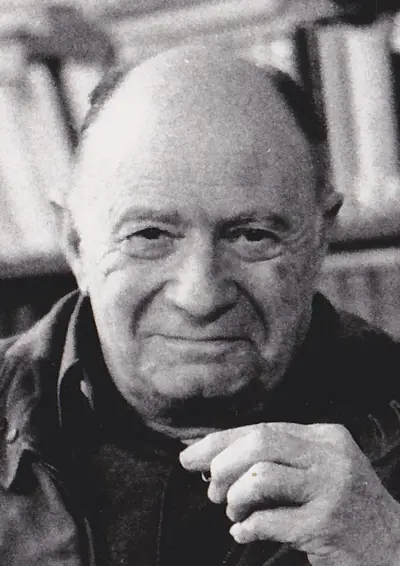
Jacques Ellul was a French philosopher, sociologist, lay theologian, and professor who was a noted Christian anarchist. Ellul was a longtime Professor of History and the Sociology of Institutions on the Faculty of Law and Economic Sciences at the University of Bordeaux. A prolific writer, he authored more than 60 books and more than 600 articles over his lifetime, many of which discussed propaganda, the impact of technology on society, and the interaction between religion and politics.
