Karl Liebknecht Quotes
The basic law of capitalism is you or I, not both you and I.
Karl Liebknecht, 1871-1919, German Member of Parliament, Party Leader of the Sparticus Socialist Party, Speech, 1907
Sourced by: Eigen's Political and Historical Quotations


Li was one of the leaders urging force to repress the demonstration. He was particularly offended by the Chinese students carrying the large “Statue of Liberty,” believing that this was an overt attempt to destabilize China. This was not known till the publication of the so-called “Tiananmen Square Papers” in 2001. The Chinese government claimed that these were forgeries.


One of the contradictions of capitalism is that at many points in history capitalism has caused and/or contributed to great death and suffering. However, that same capitalism has led to the development of science, technology, agronomy, medicine and education which has saved and preserved millions of lives and raised the standard of living more than anything else.


By producing growth and an increasing standard of living and universal education, capitalism’s citizens have the time, education, and resources to protest and produce social unrest. However, that assumes that there is also a democratic state. For Schumpeter and many others, capitalism and democracy go hand in hand, but many point to historical examples of one developing faster than the other.


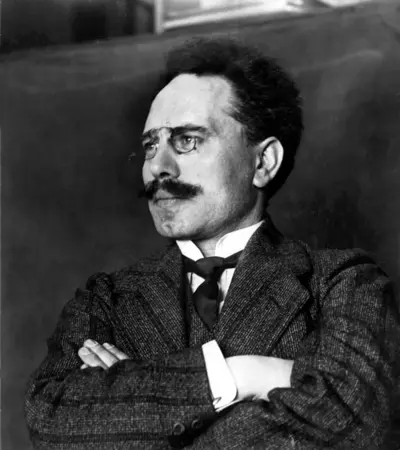
Karl Paul August Friedrich Liebknecht (German: [ˈliːpknɛçt] (listen); 13 August 1871 – 15 January 1919) was a German socialist politician and theorist, originally of the Social Democratic Party of Germany (SPD) and later a co-founder with Rosa Luxemburg of the Spartacist League and the Communist Party of Germany, which split from the SPD after World War I. He is best known for his opposition to the war in the Reichstag and his role in the Spartacist uprising of January 1919. The uprising was crushed by the SPD government and the Freikorps (paramilitary units formed of World War I veterans), which summarily executed Liebknecht and Luxemburg.
