Thomas Paine Quotes
The balance of power is the scale of peace. The same balance would be preserved were all the world destitute of arms, for all would be alike; but since some will not, others dare not lay them aside. Horrid mischief would ensue were one-half the world deprived of the use of them;
He wrote this essay anonymously and signed it as “A Lover Of Peace”
Thomas Paine, 1737-1809, British American Political Philosopher, "Thoughts on Defensive War", Pennsylvania Magazine, July 1775
Sourced by: Eigen's Political and Historical Quotations


Later, he felt that the offense had become almost invincible. See {626741}. Tesla was one of the great American immigrant scientists. He found in America the kind of intellectual and operational freedom that did not exist in the rigid, monarch-controlled, Austro-Hungarian Empire. He developed patents and techniques that formed the technological bases of radio, telephone long distance, TV, cell phones, Wi Fi, just to name a few. Most important he was Thomas Edison’s great nemesis. Edison invented DC electric generators that could power factories or entire streets in a neighborhood. Tesler invented and developed AC electrical technology which could power entire cities and he could move electricity over long distances which Edison could not. Tesler was one of the first scientists to conceive of and try to implement “Big Science” where there were huge capital investments to develop machines and systems to do what had never been done before—philosophically like the CERN Hadron Collider. Tesler even convinced a large corporation to finance the construction of a massive building and tower so he could experiment with the wireless transmission of electricity. However, as the industrial democracies have learned, Big Science can only be funded by governments and it often takes sever working in consort to afford the huge investment that is required. In Tesler’s era, the federal and state governments did not fund scientific research so his work was not only technically ahead of his time but also conceptually. He anticipated most of the problems and need for a national power grid that was challenging America even at the beginning of the 21st century.

The speaker was specifically referring to the situation in Manipur India where there were several warring factions fighting for control.


The President had asked for the views of the Joint Chief’s of Staff. At the time, the major U. S. defense doctrine depended on our nuclear deterrent which if used against the Russians would have meant mutually assured destruction since they had enough of a nuclear arsenal to destroy America as we know it.


The atomic bomb had just been used the year before. However, in the next decades, nuclear weapons were not used again as those nations with nuclear capability also had potential enemies with nuclear weapons. The fear of Mutually Assured Destruction prevented nuclear weapons from being used for a long time.


There were many who thought that the Russians would view the Mutual Security Act as aggressive and they might respond with some kind of aggressive retaliation and this could lead to war. Others felt that containment would reduce the likelihood of war.


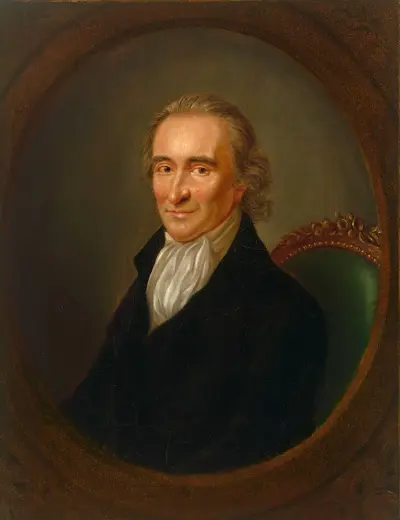
Thomas Paine was an English-born American political activist, philosopher, political theorist, and revolutionary. He authored Common Sense (1776) and The American Crisis (1776–1783), the two most influential pamphlets at the start of the American Revolution, and helped inspire the patriots in 1776 to declare independence from Great Britain. His ideas reflected Enlightenment-era ideals of transnational human rights. Historian Saul K. Padover described him as "a corsetmaker by trade, a journalist by profession, and a propagandist by inclination".
