Arabs Quotes
The Arab Heads of State have agreed to unite their political efforts at the international and diplomatic level … within the framework of the main principles by which the Arab States abide, namely, no peace with Israel, no recognition of Israel, no negotiations with it, and insistence on the rights of the Palestinian people in their own country.
Arabs, Conference of Arab States, Khartoum, Sudan, September 1, 1967, Khartoum Resolutions
Sourced by: Eigen's Political and Historical Quotations


This resolution has never been rescinded. Some Arab states have abandoned this resolution and negotiated peace and recognition such as Egypt. The majority of the Arab States did and do not want peace with Israel. They did and do not want to recognize Israel and they did and do not want to negotiate. But they often blame Israel for being intransigent in the peace process. Many Arabs want a peace treaty and want to negotiate but the extreme rejectionists generally dominate Arab politics.


The Arab League Members have historically been at each others throats with little concordance except hatred of Israel and Jews

At the time, Palestine was technically Turkish territory. Turkey was one of the defeated axis powers in World War I. England, as part of the World War I peace treaties, had control over Palestine as well as most of the rest of the Middle East.


This is an example of a diplomatic leader losing control of herself and addressing a foreign dignitary in most undiplomatic language. The basic accusation was however quite justified. The Palestinians were preoccupied with many symbols of dignity and respect while ignoring economic development, technology, health and standard of living that could have been obtained by a compromise with Israel to create a Palestinian state.

A major issue amongst Israeli’s is to how they should relate to those hostile Islamic nations in their area who claim they are at war with Israel or the Jewish People. This position in effect says that the oratory of those Islamic groups that claim that they are in a war—a holy war even—should be taken at their word and treated as a wartime enemy and Israel should actively attempt to kill and destroy them.

Syria constantly goaded Nasser and Egypt to attack Israel. However, Nasser was receiving huge foreign aid in the form of wheat which was needed to feed his population. See {595373}


One of the characteristic of many Muslim leaders is their willingness to sacrifice the lives of their people for political objectives. This has been supported by a willingness of a significant minority of the Muslim population to sacrifice their lives—especially when the leaders have been skilled enough to link their political objectives to the welfare and survival of Islam.


Hamas of one of the very few organizations whose very charter was opposed to all forms of diplomacy for the settlement of problems.

”Palestine” to the Arabs of the area meant the territory of the West Bank, Gaza, and Israel itself. They wanted to expel the Jews and or take over the whole area as a single state—Palestine—with an Arab majority. With the Israeli Defense Forces successes under Dayan, this notion of Palestine was “finished”. The notion of a Palestinian State which included the West Bank and Gaza but not Israel was then negotiated and these negotiations were ongoing for years. Minorities of Arabs and Israelis did not want to see a any Palestinian state that did not include Israel proper, and they blocked it whenever they could.


Al-Alusi attended an anti-terrorism conference in Israel. He was arrested by conservatives who cited a law passed under the Hussein regime prohibiting any contact with Israelis. However, he was immediately released citing the new freedom of Iraqis to travel anywhere they want and meet with whomever they want.

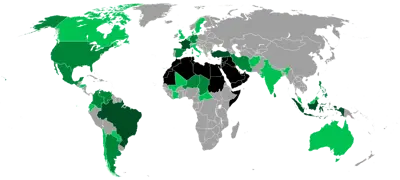
The Arabs (singular Arab /ˈær.əb/; singular Arabic: عَرَبِيٌّ, ISO 233: ‘arabī, Arabic pronunciation: [ˈʕarabi], plural Arabic: عَرَبٌ, ISO 233: ‘arab, Arabic pronunciation: [ˈʕarab] (listen)) are an ethnic group mainly inhabiting the Arab world. In modern usage the term refers to those who originate from an Arab country, whose native language is Arabic; this contrasts with the narrower traditional definition which referred to the descendants of the Tribes of the Arabian Peninsula. The term can encompass all Arabic-speaking peoples living from the Atlantic Coast of Mauritania, to the Ahwaz region of Iran, including the Arab states in Western Asia, Northern Africa, the Horn of Africa, Western Indian Ocean islands (including the Comoros), and Southern Europe (like Sicily, Malta, and formerly in Al-Andalus / Iberian Peninsula). They also live, in significant numbers, in the Americas, Western Europe, Indonesia, Israel, Turkey, India and Iran. The Arab diaspora is established around the world. Though Islam started in Arabia, Arabic is the language of Islamic scripture, and most Arabs are Muslims. However, only about 20% of Muslims are Arabs.
