Amin Al-Hafiz Quotes
Nasser’s Egypt is selling out Palestine for a few bushels of wheat.
Syria constantly goaded Nasser and Egypt to attack Israel. However, Nasser was receiving huge foreign aid in the form of wheat which was needed to feed his population. See {595373}
Amin, Al-Hafiz, ~1921-2001, Syrian General and Dictator, 1963
Sourced by: Eigen's Political and Historical Quotations

That country was virtually destitute and American aid amounted to almost 40% of the food supply of the entire country.


”Palestine” to the Arabs of the area meant the territory of the West Bank, Gaza, and Israel itself. They wanted to expel the Jews and or take over the whole area as a single state—Palestine—with an Arab majority. With the Israeli Defense Forces successes under Dayan, this notion of Palestine was “finished”. The notion of a Palestinian State which included the West Bank and Gaza but not Israel was then negotiated and these negotiations were ongoing for years. Minorities of Arabs and Israelis did not want to see a any Palestinian state that did not include Israel proper, and they blocked it whenever they could.


The Syrians hate the Lebanese and vica versa, After the Lebanese Civil War, Syria took advantage of the weakened nation to send troops to occupy and control Lebanon politically which it did for over a decade.

Mohamed Anwar El-Sedat

This was an interview with Reuters News Agency in English. Arab leaders often make English Statements to the Western Press which are completely contradictory to what they say to their Arab constituents and followers. In this case he seems to acknowledge that Hamas and he do not deny the right of Israel to exist and accepts that nation per se. Yet at the same time Meshaal has never made this statement in Arabic and has made no gesture to change the Hamas Charter which calls for the destruction and elimination of Israel or to criticize the Hamas other leaders and followers who constantly call for “Death to Israel” and the destruction of the Jewish state. See {585395} for an eloquent statement of the practice of Arab leaders and politicians.


Clinton had been spending the greater part of his time trying to mediate the Arab-Israeli conflict.

Son of Egyptian President


This is an example of a diplomatic leader losing control of herself and addressing a foreign dignitary in most undiplomatic language. The basic accusation was however quite justified. The Palestinians were preoccupied with many symbols of dignity and respect while ignoring economic development, technology, health and standard of living that could have been obtained by a compromise with Israel to create a Palestinian state.


In the complicated and arcane Middle East, substantial majorities of Israelis and Palestinians both favored a two state solution, thus creating a Palestinian State out of the West Bank and Gaza. However, the Hamas terrorist organization won the majority of seats in the Parliament and formed the “government” of the Palestinian Authority. Hamas opposed Israel’s right to exist at all, as that position as well as virulent Anti-Semitic threats to all Jews in the world. Many called for Hamas to change their charter and crease their opposition to the right of Israel to exist. The President of the Palestinian authority called for new elections but Hamas refused. Thus Blair and other diplomats the world over were in a very difficult situation.

There was a major revolution ongoing in Syria with different Arab Muslim factions slaughtering each other. The government side was particularly vicious shelling and using poison gas unarmed civilian enclaves in areas where the regime was not popular. Many nations called for humanitarian intervention. Netanyahu opposed any interventions while other politicians like President and former prime minister Shimon Peres disagreed and thought that Israel and other nations should intervene on humanitarian grounds and prevent the Assad government from butchering its own non-combatant civilians.


At that time Jews in Palestine were in the minority. The issue of how to obtain the land was hotly debated amongst Jewish groups. Jabotinsky was at one extreme—colonize and take the land just as the Arabs had done to the Jews when there was a Jewish majority. His view did not however prevail. The policy was to buy the land from individual Arabs and Jewish land up to 1948 was obtained that way. In that year the UN partitioned Palestine and 11 Arab armies attacked the new state of Israel and asked the Arab civilians to leave the area so that the Army could cleanse it of Jews. Many did not, and they or their descendants are still on their land or have sold it. The Arabs who left, were suspected of being possible collaborators or terrorists, and they have never been paid for their land or allowed to return. Compensation is still in dispute. At the same time Jews driven out of Arab countries by law and the military have never been compensated or given any right of return either.
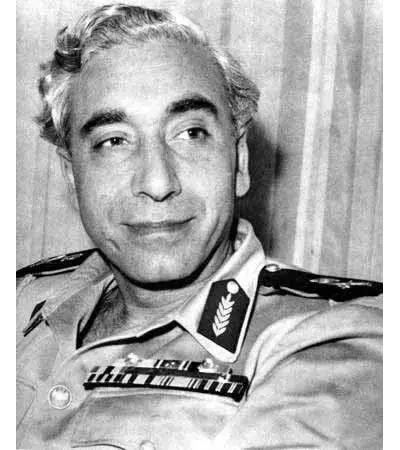
- Born: November 12, 1921
- Died: December 17, 2009
- Nationality:
- Profession:
Amin al-Hafiz (Arabic: أمين الحافظ) was a Syrian politician, general, and member of the Ba'ath Party who served as the President of Syria from 27 July 1963 to 23 February 1966.
