Anthony Shadid Quotes
The Americans invaded a country without understanding what eight years of a war with Iran had meant, how that traumatized Iraq. They didn't appreciate what they support for a decade of sanctions in Iraq had done to Iraq and the bitterness that it created and that it wiped out the middle class.
Shadid, Anthony. Interview by Brian Lamb. Q&A, C-SPAN, 30 Oct. 2005.


In this remarkable quotation, the king whose own invasion by Iraq was only stopped by American troops in the Gulf War, tells the Arab world that the American occupation which was endorsed by the Iraqi government was illegal. Many others in the world and even many in the U. S. agreed about the illegality, but the King claims to be one of the major allies and supporters of the United States. What he says for Arab and Islamic consumption is different from what he tells American and other Western diplomats. See {620141} for another example.


DPs were “displaced persons” -- the euphemism for people who were no longer welcome in their country of birth. Congress, made up mostly of immigrants or the children of immigrants who were poor and downtrodden, were not enthusiastic about the United States absorbing many of the world’s DPs resulting from WWII.

The George W. Bush Administration told Congress and the people of the world that Iraq had developed weapons of mass destruction and were about to deploy them. We invaded Iraq and it turned out that there were no WMD’s in Iraq. No one knows if the all in the administration honestly believed the intelligence, how many doubted it, and how many others suppressed contradictory evidence of which there was much. Some members of the administration wanted an invasion of Iraq for other reasons, personal and economic.

This concept of Total War turns out to be the only way to bring many conflicts to an end. Sherman was hated by generations of Southerners because he appeared to be vengeful to humble the Southern pride and spirit. But actually, Sherman was not personally vengeful at all and respected the South and understood its point of view more than most in the North. However, he was one of the first of the Western World’s military leaders to realize that with modern warfare and the then modern weapons, the only way to win a war was to persuade the enemy to stop fighting and if they refused, as the South kept doing, the only rational and humane course was to end the war as swiftly and totally as possible.

Almost all economists believe that Harding had it totally wrong. WWII for example was one of the greatest increases in productivity in world history. The Civil War and the two world wars both were accompanied by many increases in industrial productivity. The losing side is usually totally devastated by war, and sometimes the winners are impoverished as with England and Russia in WWII. However, the North thrived in the Civil War and America did in WWII. Many economists say that war often impairs the economy of even a winning country in that the war expenditures generally are made at the expense of the civilian economy—infrastructure, public transportation, education, and in the decades following the war the lack of domestic investment in the war years reduces medium and long term growth.

At first reading, this quotation appears to have been made in 2013 with respect to the American-led Coalition in the Afghan War in 2013. But this was 133 years earlier. Little had changed.

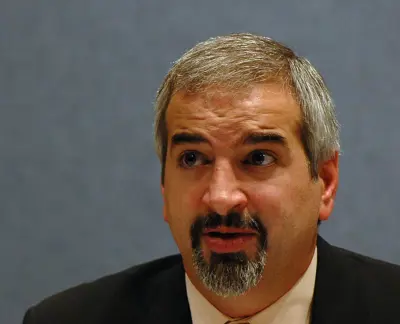
Anthony Shadid was a foreign correspondent for The New York Times based in Baghdad and Beirut who won the Pulitzer Prize for International Reporting twice, in 2004 and 2010.
